
For millennia, humanity has been on an unwavering quest for the "secret" to effortless weight loss. We’ve chased fads, endured restrictive diets, and sweated through countless workouts, often to find ourselves back at square one, battling the relentless pull of a stubborn metabolism. What if the key to unlocking a more efficient, fat-burning engine wasn’t a futuristic pill or an exotic superfood, but a humble, fiery seed that has graced our tables for thousands of years?
Enter the unassuming mustard seed. Long celebrated for its pungent kick and culinary versatility, this tiny powerhouse is now drawing attention from the scientific community for a much more profound reason: its potential to significantly boost our body’s thermogenic rate. This isn’t just about burning a few extra calories; it’s about fundamentally re-tuning our internal furnace, encouraging it to burn more efficiently, even at rest.
This article delves deep into the fascinating world of mustard seeds, peeling back layers of history, culinary tradition, and cutting-edge science. We will explore the intricate mechanisms by which the bioactive compounds within these seeds interact with our physiology, particularly focusing on their capacity to stoke the fires of thermogenesis. For the knowledgeable seeker, this isn’t just another diet hack; it’s an exploration into the elegant interplay between nature’s pantry and our body’s complex metabolic machinery, offering a compelling narrative that bridges ancient wisdom with modern scientific discovery.
The Weight Loss Conundrum: More Than Just Calories In, Calories Out
Before we unlock the secret of the mustard seed, let’s first understand the landscape of weight loss, a terrain often riddled with frustration. While the fundamental principle of "calories in, calories out" remains valid, it grossly oversimplifies the intricate dance of hormones, genetics, lifestyle, and metabolic efficiency that dictates our body weight.
At the heart of this dance is metabolism, the sum of all chemical processes that occur in our body to maintain life. Our Basal Metabolic Rate (BMR) represents the calories we burn simply existing – breathing, circulating blood, maintaining body temperature. On top of this, we add calories burned through physical activity and the Thermic Effect of Food (TEF), the energy expended digesting, absorbing, and storing nutrients.
However, a crucial, often overlooked, component is thermogenesis. This is the process of heat production in the body. While some heat is a byproduct of normal metabolic activities, there’s also adaptive thermogenesis, where our body actively generates heat in response to environmental cues (like cold exposure) or dietary components. This is where the magic happens for weight management. When our body increases heat production, it’s essentially burning more calories, often by "wasting" energy as heat rather than storing it as fat.
Brown Adipose Tissue (BAT), or brown fat, plays a starring role in this process. Unlike white fat, which stores energy, brown fat is specialized in burning calories to produce heat. It’s packed with mitochondria, the powerhouses of our cells, which contain a unique protein called Uncoupling Protein 1 (UCP1). UCP1 allows protons to bypass the normal ATP-generating pathway, dissipating the energy directly as heat. The more active our BAT, the more efficiently we can burn calories and potentially prevent fat accumulation.
The challenge for many is a sluggish metabolism, often characterized by suboptimal thermogenic activity. Our modern sedentary lifestyles, coupled with highly processed diets, can dampen our body’s natural calorie-burning furnace. This is where the quest for metabolic activators – substances that can gently nudge our thermogenic rate upwards – becomes paramount.
The Humble Seed with a Fiery Legacy: A Culinary and Medicinal Journey
Mustard, derived from the seeds of various Brassica species, has been a staple in human culture for millennia. Its history is as rich and diverse as its flavor profile.
Archaeological evidence suggests mustard cultivation dates back to ancient civilizations. The Romans crushed mustard seeds with grape juice to create a paste, a precursor to modern mustard. In ancient India, mustard seeds were not only a culinary essential but also revered in Ayurvedic medicine for their warming properties and ability to stimulate digestion. The Greeks and Egyptians used mustard for medicinal purposes, from alleviating aches to treating scorpion stings.
There are three primary types of mustard seeds, each contributing distinct characteristics:
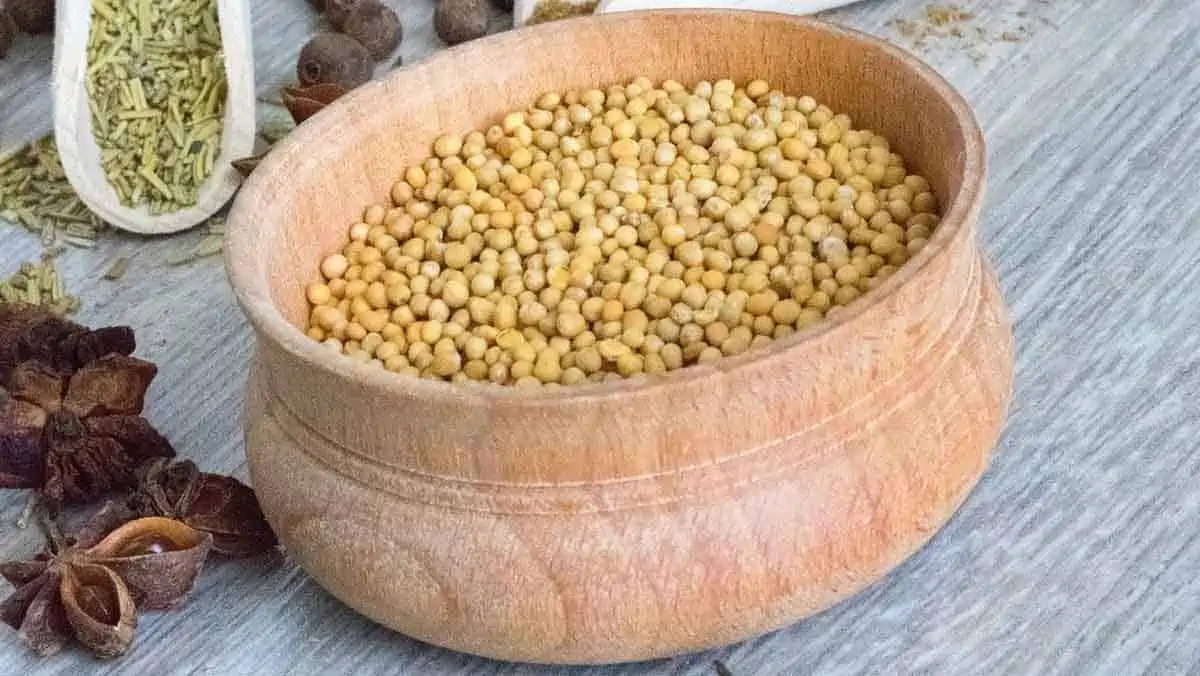
- Yellow Mustard Seeds (Sinapis alba or Brassica hirta): Also known as white mustard, these are the mildest and largest of the three. They contain sinalbin, which gives them a less pungent, more aromatic flavor. Often used in pickling, brines, and to make classic American yellow mustard.
- Brown Mustard Seeds (Brassica juncea): These are more pungent and smaller than yellow seeds. They contain sinigrin, which is responsible for their sharp, spicy kick when ground and mixed with water. Brown mustard is a staple in Indian cuisine and is used to make Dijon mustard.
- Black Mustard Seeds (Brassica nigra): The smallest and most pungent, black mustard seeds also contain sinigrin. They are intensely hot and are often used whole in tempering spices in Indian cooking or to make strong mustards in Europe.
Beyond their culinary applications, traditional medicine systems across the globe have long recognized mustard seeds for their purported health benefits. They were used as a rub for sore muscles (a testament to their warming properties), a digestive aid, a decongestant, and even as a stimulant. While traditional uses often lack the rigor of modern scientific validation, they frequently provide valuable clues for contemporary research. The consistent thread through many of these applications is mustard’s ability to "heat" or "stimulate" the body – a hint at its thermogenic potential.
Unveiling the Bioactive Arsenal: The Science of Mustard’s Fire
The true power of mustard seeds, and indeed many other cruciferous vegetables like broccoli and kale, lies in a unique class of compounds called glucosinolates. These are sulfur-containing compounds that are inactive in their intact form, residing peacefully within the plant’s cells. However, when the plant tissue is damaged – through chewing, cutting, or grinding – an enzyme called myrosinase is released. Myrosinase acts as a molecular scissor, hydrolyzing glucosinolates into a variety of potent bioactive compounds, most notably isothiocyanates (ITCs).
This enzymatic conversion is crucial. Without myrosinase, the glucosinolates remain largely inert. This explains why chewing or grinding mustard seeds, or consuming them in preparations where they’ve been mixed with water (like mustard paste), unlocks their full pungent and beneficial potential.
The specific type of ITC produced depends on the original glucosinolate:
- Sinigrin (found predominantly in brown and black mustard) breaks down into Allyl Isothiocyanate (AITC), which is responsible for the sharp, pungent taste and many of the observed biological effects.
- Sinalbin (found in yellow mustard) yields p-Hydroxybenzyl Isothiocyanate, which is less volatile but still contributes to the seed’s flavor and potential benefits.
It is these ITCs, particularly AITC, that are believed to be the primary architects of mustard seeds’ thermogenic and metabolic-boosting properties.