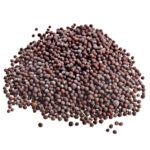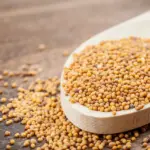

In the grand tapestry of human existence, the quest for longevity has been an enduring thread, woven through ancient myths, philosophical treatises, and modern scientific endeavors. We chase vitality, seeking to extend not just our years, but the quality of those years. In this pursuit, our gaze often drifts towards exotic superfoods, cutting-edge supplements, or complex biohacking protocols. Yet, sometimes, the most profound secrets lie hidden in plain sight, in the unassuming staples that have graced our tables for millennia. One such quiet champion, often relegated to a mere condiment, is the humble white mustard seed (Sinapis alba).
Imagine a tiny, pale orb, barely larger than a pinhead, holding within its delicate shell a potent symphony of compounds, a biochemical orchestra ready to play a tune of sustained health and vibrant longevity. This isn’t just about adding a kick to your sandwich; it’s about unlocking a deep, ancestral wisdom and leveraging modern science to reveal white mustard as a powerful, yet often overlooked, ally in our daily pursuit of a longer, healthier life.
This is the story of white mustard, a journey from ancient fields to modern laboratories, from a simple spice to a sophisticated longevity enhancer. It’s a tale that invites the knowledgeable reader to look beyond the surface, to appreciate the profound impact of daily dietary choices, and perhaps, to embrace a new, spicy secret to a life well-lived.
The Ancestral Whisper: White Mustard Through the Ages
Our story begins not in a laboratory, but in the sun-drenched fields of the Mediterranean and Western Asia, where Sinapis alba first took root thousands of years ago. Long before its scientific properties were understood, humanity recognized its distinctive pungency and therapeutic potential.
The ancient Egyptians, masters of medicine and culinary arts, are believed to have cultivated mustard, using its seeds not only to flavor food but also as a digestive aid and a poultice for various ailments. Hieroglyphs and ancient texts hint at its presence, suggesting its value was appreciated across social strata.
The Greeks, with their fervent pursuit of knowledge and health, integrated mustard into their medicinal practices. Hippocrates, the father of Western medicine, reportedly used mustard for its warming properties and as a stimulant. The philosopher Pythagoras even wrote about its benefits for snakebites, a testament to its perceived potency.
It was the Romans, however, who truly catapulted mustard into widespread culinary and medicinal prominence across Europe. They ground the seeds with unfermented grape juice (must) to create mustum ardens – "burning must" – the precursor to the mustard we know today. Roman legions, ever practical, carried mustard seeds with them, not just for flavor, but for their perceived ability to ward off illness and boost stamina on arduous campaigns. As the Roman Empire expanded, so too did the cultivation and appreciation of white mustard, weaving it into the fabric of European cuisine and folk medicine.
Throughout the Middle Ages, monasteries cultivated mustard, recognizing its economic and health benefits. It was a common ingredient in medieval kitchens, celebrated for its ability to cut through rich foods and aid digestion. Herbalists continued to prescribe it for respiratory issues, arthritis, and as a general tonic.
Fast forward to the Age of Exploration, and white mustard, alongside its black and brown cousins, journeyed across oceans, finding new homes and new culinary expressions in every corner of the globe. From the pungent Dijon mustards of France to the fiery Bengali shorshe paste, its versatility and unique flavor profile ensured its enduring presence.
What these ancient civilizations and generations instinctively understood, modern science is now meticulously unraveling. The "burning must" wasn’t just a sensory delight; it was a potent pharmaceutical cocktail, delivered daily through the simplest of means.
The Biochemical Symphony: Unpacking White Mustard’s Potency
To understand white mustard’s longevity-boosting potential, we must delve into its molecular architecture, a sophisticated design that belies its humble appearance. The magic largely resides in a class of compounds known as glucosinolates, particularly sinalbin in white mustard. But the story doesn’t end there.
When the mustard seed is crushed, chewed, or otherwise damaged, an enzyme called myrosinase is released. Myrosinase acts like a molecular scissor, hydrolyzing the glucosinolates into a cascade of bioactive compounds, primarily isothiocyanates (ITCs), and specifically p-hydroxybenzyl isothiocyanate (pHBITC) in white mustard. This enzymatic conversion is the crucial step, transforming inert precursors into the powerful compounds responsible for mustard’s characteristic pungency and its profound health benefits.
Let’s break down the key players:
-
Glucosinolates and Isothiocyanates (ITCs): The Stars of the Show
- Antioxidant Powerhouse: ITCs are potent activators of the Nrf2 pathway, a master regulator of cellular defense against oxidative stress. Nrf2 activation leads to the increased production of endogenous antioxidant enzymes like glutathione S-transferases (GSTs) and quinone reductases (NQO1). This internal antioxidant machinery is far more effective and sustainable than relying solely on external dietary antioxidants. By bolstering the body’s natural defenses, ITCs help protect cells from damage caused by free radicals, a primary driver of aging and chronic disease.
- Anti-inflammatory Agents: Chronic inflammation is now recognized as a root cause of many age-related diseases, from cardiovascular disease to neurodegeneration and cancer. ITCs exert powerful anti-inflammatory effects by modulating various signaling pathways, including NF-κB, a central mediator of inflammatory responses. They can inhibit the production of pro-inflammatory cytokines and enzymes, helping to quell the "silent fire" that slowly erodes our health.
- Cancer Chemoprevention: This is perhaps the most extensively studied benefit of glucosinolates and ITCs. Their anti-cancer mechanisms are multi-faceted:
- Detoxification: ITCs enhance both Phase I and Phase II detoxification enzymes in the liver. Phase I enzymes prepare toxins for elimination, while Phase II enzymes conjugate them into water-soluble forms for excretion. This efficient detoxification process helps neutralize carcinogens and other harmful compounds before they can damage DNA.
- Apoptosis Induction: ITCs can trigger programmed cell death (apoptosis) in cancerous cells, without harming healthy cells. This is a critical mechanism for preventing tumor growth.
- Cell Cycle Arrest: They can halt the uncontrolled proliferation of cancer cells by arresting their cell cycle, preventing them from dividing and spreading.
- Anti-angiogenesis: ITCs have been shown to inhibit angiogenesis, the formation of new blood vessels that tumors need to grow and metastasize.
- DNA Protection: By reducing oxidative stress and enhancing detoxification, ITCs indirectly protect DNA from damage, thus lowering the risk of mutations that can lead to cancer.