
I. The Genesis of Comfort: A Tropical Revelation
In the quiet hours of the night, or amidst the hurried rhythm of a demanding day, a familiar discomfort often arises. A burning sensation, a sour taste, a gnawing ache – the tell-tale signs of indigestion, acid reflux, or heartburn. For millennia, humanity has grappled with this primal irritation, seeking solace in remedies both crude and sophisticated. From chalky concoctions to potent pharmaceuticals, the quest for digestive peace has driven countless innovations. Yet, often, the most profound solutions lie not in the sterile labs of modern science, but in the vibrant, verdant embrace of nature itself.
Enter the papaya, Carica papaya – a fruit often celebrated for its sweet, tropical flavor and vivid hue. But beneath its inviting exterior lies a complex, biochemical marvel, a veritable pharmacy cultivated by the earth. For those who understand its profound properties, papaya is not just a fruit; it is a gentle healer, a digestive diplomat, and, perhaps most remarkably, nature’s most effective antacid.
This is the unfolding story of papaya, a journey from ancient folklore to contemporary scientific understanding, revealing why this humble fruit offers a holistic, unparalleled solution to acid-related digestive woes. It’s a narrative that transcends mere symptom relief, delving into the intricate mechanisms by which papaya not only soothes the burn but actively optimizes the very process of digestion, offering a long-term embrace of comfort that synthetic alternatives often fail to deliver. For the discerning individual, the knowledgeable seeker of natural wisdom, the papaya represents not just a remedy, but a re-education in digestive wellness.
II. A Legacy Etched in Time: Papaya’s Historical and Cultural Tapestry
The story of papaya begins not in a laboratory, but in the sun-drenched lowlands of southern Mexico and Central America. Here, amidst the lush biodiversity of ancient Mesoamerica, Carica papaya first blossomed, its large, palmate leaves casting shade over the nascent civilizations that would soon recognize its extraordinary gifts. The Mayans, with their intricate knowledge of the natural world, called it "I’ik," and the Aztecs, "Chichihualxochitl," or "wet nurse flower," a testament to its nourishing properties.
It was Christopher Columbus, during his voyages to the Americas, who famously bestowed upon it the moniker "Fruit of the Angels," captivated by its exquisite taste and fragrance. But long before European explorers marvelled at its culinary delights, indigenous peoples had already unlocked its medicinal secrets. They observed its remarkable ability to tenderize meat, wrapping tough cuts in its leaves or rubbing them with its raw fruit. This practice, born of necessity and keen observation, was an unwitting precursor to the scientific discovery of the powerful enzymes within.
Beyond meat tenderizing, the wisdom of these ancient cultures recognized papaya as a potent digestive aid. They used the fruit, leaves, and even the milky latex from the unripe fruit to alleviate indigestion, bloating, and stomach discomfort. It was a common remedy for constipation, a poultice for wounds, and a folk medicine for various ailments, from fevers to skin irritations. This deep, intuitive understanding of papaya’s multifaceted benefits was passed down through generations, becoming an integral part of their traditional pharmacopoeia.
As the Age of Exploration unfolded, papaya embarked on its own global journey. Spanish and Portuguese traders carried its seeds across continents, introducing it to the Philippines, India, Africa, and beyond. In each new land, it adapted and flourished, integrating itself into local cuisines and traditional medicine systems. In Ayurvedic medicine, papaya was recognized for its digestive, carminative, and anti-inflammatory properties. In traditional Chinese medicine, it was used to improve digestion, reduce swelling, and promote lactation. Its widespread adoption across diverse cultures underscores a universal acknowledgment of its inherent healing power, a testament to its effectiveness long before modern science could articulate the ‘why.’
The turning point in papaya’s scientific story arrived in the late 19th century when scientists isolated the primary enzyme responsible for its meat-tenderizing prowess: papain. This discovery ignited a wave of research, moving papaya from the realm of folklore into the spotlight of biochemical investigation. It was the first step in unraveling the intricate mechanisms behind the "Fruit of the Angels" and understanding why it had been, for centuries, a silent guardian of digestive comfort.
III. The Botanical Marvel: Understanding Carica papaya
To truly appreciate papaya’s profound impact on digestive health, one must first understand the botanical marvel that is Carica papaya. This fast-growing, short-lived perennial tree, belonging to the Caricaceae family, is more accurately described as a large herbaceous plant, often reaching heights of 10 to 30 feet. Unlike most trees, its trunk is soft and spongy, lacking true woody tissue, crowned by a canopy of deeply lobed, spirally arranged leaves.
Papaya is a testament to nature’s efficiency, capable of producing fruit year-round in tropical and subtropical climates, yielding hundreds of fruits over its relatively short lifespan of 5-10 years. While numerous varieties exist, they generally fall into two main categories: the larger, Mexican-type papayas (Maradol, Tainung), often weighing several pounds, and the smaller, Hawaiian-type papayas (Solo, Sunrise, Sunset), typically weighing around a pound. While their flavor profiles and sizes vary, their fundamental biochemical composition, particularly their enzymatic activity, remains consistently beneficial.
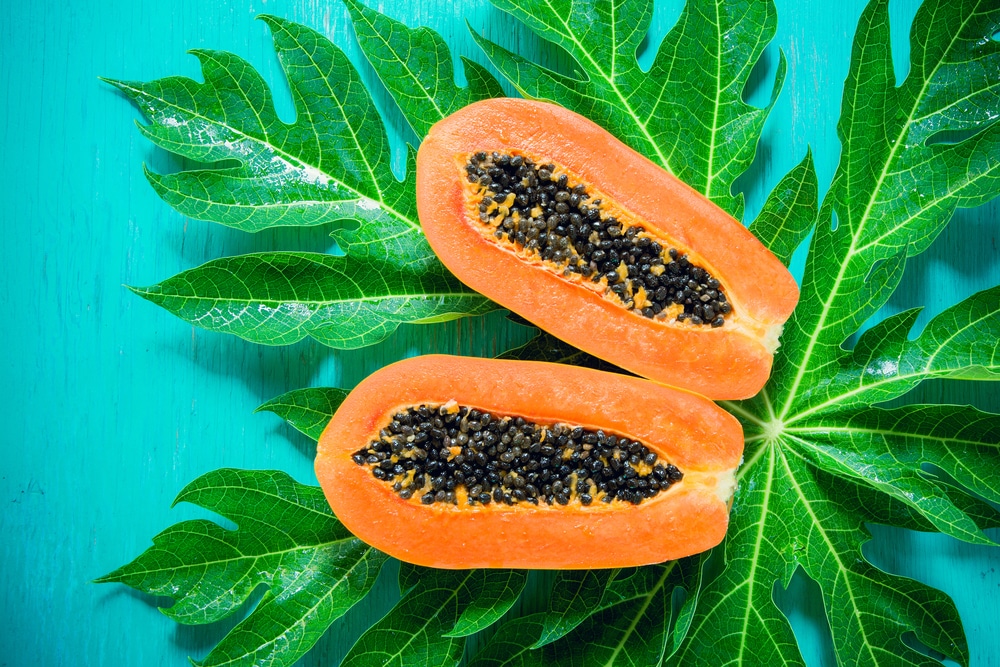
The life cycle of the papaya plant is fascinating and directly impacts its medicinal properties. From a tiny seed, it rapidly grows, producing flowers that can be male, female, or hermaphroditic, leading to the development of its distinctive fruits. The fruit itself transforms dramatically as it ripens. Green, unripe papaya is firm, less sweet, and contains a higher concentration of the milky latex, which is rich in proteolytic enzymes like papain. As it matures, the fruit softens, its skin turns from green to yellow-orange, and its flesh becomes sweet and succulent, while the concentration of active enzymes, though still present, tends to be somewhat lower compared to its green counterpart. This distinction is crucial for understanding its therapeutic applications: green papaya is often favored for its potent enzymatic activity, while ripe papaya offers a balanced blend of enzymes, vitamins, and minerals.
The optimal growing conditions for papaya – abundant sunshine, well-drained soil, and consistent warmth – contribute significantly to its rich biochemical profile. These environmental factors influence the synthesis of its myriad active compounds, ensuring that each fruit is a potent package of digestive support. Understanding the botanical journey of papaya, from seed to ripe fruit, provides a foundational appreciation for the natural processes that imbue it with its extraordinary capacity to heal and comfort.
IV. The Alchemical Heart: Unpacking Papaya’s Biochemical Arsenal
The true genius of papaya as an antacid lies not in a single compound, but in a sophisticated symphony of biochemical constituents working in concert. It’s a testament to nature’s holistic design, where each element contributes to a synergistic effect far greater than the sum of its parts.
The Enzymatic Powerhouse: Papain and Chymopapain
At the forefront of papaya’s digestive prowess are its potent proteolytic enzymes: papain and chymopapain. These are not mere digestive aids; they are sophisticated molecular scissors, capable of breaking down complex proteins into smaller, more easily digestible peptides and amino acids.
Papain: This is the most well-known and abundant enzyme in papaya, particularly concentrated in the unripe fruit and its latex. Papain is a cysteine protease, meaning it utilizes a cysteine residue in its active site to cleave peptide bonds. Its activity is remarkably broad-spectrum, capable of digesting a wide array of proteins. Crucially, papain retains its activity across a broad pH range, from acidic (pH 3-4) to alkaline (pH 6-7), making it exceptionally effective in the diverse and fluctuating environment of the human digestive tract, from the acidic stomach to the more alkaline small intestine.
Chymopapain: Similar to papain, chymopapain is also a cysteine protease found in papaya. While sharing many characteristics with papain, it exhibits slightly different substrate specificity and optimal pH ranges, offering a complementary digestive action. The presence of both enzymes ensures a more comprehensive breakdown of proteins, addressing a wider variety of dietary challenges.
The Link to Antacid Effect – A Deeper Understanding:
It’s vital to clarify that papain and chymopapain do not directly neutralize stomach acid in the way that conventional antacids (like calcium carbonate or magnesium hydroxide) do. Their ‘antacid’ effect is far more nuanced, proactive, and fundamentally superior.
- Reduced Gastric Burden: When we consume protein-rich meals, the stomach produces hydrochloric acid (HCl) and pepsin to initiate protein digestion. If protein digestion is inefficient, large, undigested protein molecules remain in the stomach for extended periods. This prolonged presence triggers continued acid secretion, leading to an overproduction of acid. By pre-emptively or concurrently breaking down proteins more efficiently, papain and chymopapain significantly reduce the burden on the stomach’s own digestive machinery. This means less need for excessive acid production in the first place.
- Faster Gastric Emptying: Undigested food lingering in the stomach creates pressure. This pressure can force stomach contents, including acid, back up into the esophagus, causing reflux and heartburn. By accelerating the breakdown of proteins, papaya enzymes facilitate faster gastric emptying. Food moves out of the stomach more swiftly, reducing the likelihood of pressure build-up and subsequent reflux episodes.
- Prevention of Fermentation and Gas: Inefficient protein digestion in the stomach means more undigested proteins reaching the intestines. Here, they can become fuel for undesirable bacteria, leading to fermentation, gas production, bloating, and further discomfort, all of which can exacerbate feelings of indigestion and pressure. Papaya enzymes minimize this scenario.
In essence, papaya’s enzymatic action doesn’t just put out the fire; it prevents the fuel from catching fire in the first place by optimizing the initial stages of digestion.