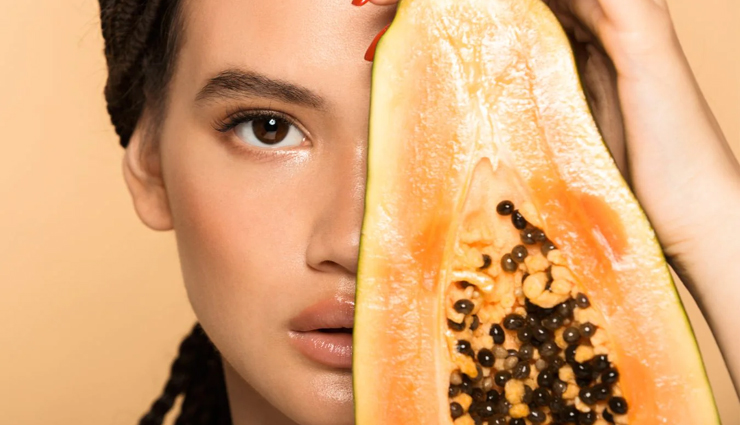

In the endless quest for radiant, resilient, and youthfully vibrant skin, humanity has traversed a myriad of paths – from ancient alchemies to cutting-edge biotechnologies. We’ve sought solace in the earth’s most precious minerals, the ocean’s deepest treasures, and the laboratory’s most ingenious compounds. Yet, sometimes, the most profound answers lie hidden in plain sight, veiled by the unassuming simplicity of nature’s bounty. Among these, one tropical fruit emerges as an undisputed dermatological powerhouse, a true "secret ingredient" that your skin, whether you realize it or not, profoundly craves: the humble papaya.
More than just a delicious addition to a fruit salad or a refreshing smoothie, the papaya, with its vibrant orange flesh and subtly sweet aroma, holds a complex tapestry of compounds that orchestrate a symphony of benefits for the skin. It is a golden elixir, a testament to nature’s intricate design, capable of transforming a dull, troubled complexion into one that glows with health and vitality. This isn’t merely anecdotal folklore; it is a narrative woven through centuries of traditional wisdom, now increasingly validated by the rigorous scrutiny of modern science. To truly appreciate why papaya is the dermatological ally your skin has been yearning for, we must embark on a journey – a story that spans continents and epochs, delving into its historical reverence, unraveling its biochemical intricacies, and exploring its multifaceted applications in contemporary skincare.
A Journey Through Time: Papaya’s Ancestral Roots in Skincare
Our story begins in the lush, verdant heartlands of Central America and Southern Mexico, the birthplace of Carica papaya. Here, millennia ago, indigenous civilizations discovered not only its palatable sweetness but also its remarkable medicinal and cosmetic properties. The Mayans, renowned for their sophisticated understanding of the natural world, revered the papaya, incorporating it into their daily lives for both sustenance and healing. They applied its pulp directly to the skin to soothe irritations, treat minor wounds, and imbue the complexion with a healthy luminosity. The Aztecs, too, recognized its therapeutic value, using it as a digestive aid and a topical remedy for various ailments.
It was Christopher Columbus, upon encountering this magnificent fruit in the Caribbean, who famously christened it the "fruit of the angels," a moniker that, in retrospect, seems remarkably prophetic given its angelic touch on human skin. As trade routes expanded and explorers ventured further, papaya seeds traveled across oceans, finding new homes in tropical and subtropical regions across Asia, Africa, and the Pacific Islands. In these new lands, it was swiftly adopted into local traditional medicine systems, further cementing its reputation as a versatile healer.
In Ayurvedic medicine, the ancient Indian system of holistic healing, papaya was lauded for its ability to balance the doshas, particularly pitta, which governs metabolism and transformation, often manifesting in skin inflammations and imbalances when aggravated. It was used internally for digestion and detoxification, and externally, its pulp or extracts were employed in face masks and poultices to brighten the skin, reduce blemishes, and accelerate wound healing. Similarly, traditional Chinese medicine incorporated papaya for its digestive enzymes and its perceived ability to clear heat and toxins, which were often linked to skin conditions like acne and dullness. Across various cultures, the common thread was an intuitive understanding that this vibrant fruit possessed a unique capacity to restore, rejuvenate, and protect the skin. These ancient practices, born of observation and generational wisdom, laid the foundational understanding that modern science is now so diligently validating and articulating.
The Scientific Symphony: Deconstructing Papaya’s Skin-Transforming Compounds
The true magic of papaya for skin lies in its extraordinarily rich and diverse biochemical composition. It is not merely one "secret ingredient" but rather a potent cocktail of active compounds that work in synergistic harmony, creating an effect far greater than the sum of its parts. To truly appreciate its prowess, we must dissect this golden fruit and understand the role each key player performs in its dermatological symphony.
A. Papain: The Enzymatic Maestro
At the heart of papaya’s skin-transforming abilities is papain, a powerful proteolytic enzyme. Proteolytic means protein-dissolving, and this is precisely where papain exerts its primary magic. Unlike harsh physical exfoliants or highly acidic chemical peels, papain works by gently breaking down the protein bonds that hold together dead, damaged, and devitalized skin cells on the surface.
Think of your skin as a constantly regenerating ecosystem. New cells are born in the deeper layers, slowly migrating upwards, eventually reaching the surface where they flatten, harden, and eventually shed. Sometimes, this natural shedding process, known as desquamation, becomes sluggish due to age, environmental factors, or skin conditions. This accumulation of dead cells leads to a dull, rough complexion, clogged pores, and an impaired ability for skincare products to penetrate effectively.
Papain acts as a gentle, yet effective, enzymatic ‘pac-man,’ selectively digesting these defunct surface proteins. It doesn’t abrade the skin or chemically strip it; instead, it delicately dissolves the intercellular glue, allowing for the effortless removal of the superficial stratum corneum. The benefits of this enzymatic exfoliation are profound:
- Brighter Complexion: By removing the layer of dull, dead cells, the fresh, vibrant cells underneath are revealed, immediately boosting skin luminosity.
- Smoother Texture: The skin feels remarkably softer and smoother to the touch, with a refined texture.
- Unclogged Pores & Reduced Acne: Papain’s ability to break down proteinaceous debris helps to clear out congested pores, making it an excellent ally against blackheads, whiteheads, and mild acne.
- Enhanced Product Absorption: With the barrier of dead cells removed, subsequent serums, moisturizers, and treatments can penetrate more deeply and work more effectively.
- Gentle Nature: For those with sensitive skin who find AHAs or physical scrubs too irritating, papain offers a much gentler alternative, providing effective exfoliation without causing redness or irritation (though patch testing is always advised).
B. Vitamins Galore: The Nutritional Powerhouse
Beyond papain, papaya is a veritable treasure trove of vitamins, each playing a crucial role in maintaining and restoring skin health.
-
Vitamin C (Ascorbic Acid): The Brightening & Collagen Architect
Papaya is famously rich in Vitamin C, a powerhouse antioxidant and an indispensable nutrient for skin. Its contributions are multifaceted:- Potent Antioxidant: Vitamin C valiantly combats free radicals, unstable molecules generated by UV radiation, pollution, and stress, which are notorious for causing oxidative damage to skin cells, leading to premature aging and cellular degradation.
- Collagen Synthesis Booster: Crucially, Vitamin C is an essential cofactor in collagen production. Collagen is the most abundant protein in the skin, responsible for its structural integrity, firmness, and elasticity. Adequate Vitamin C ensures robust collagen synthesis, helping to maintain skin’s youthful bounce and reducing the appearance of fine lines and wrinkles.
- Melanin Inhibitor & Brightener: Vitamin C also plays a significant role in inhibiting tyrosinase, the enzyme responsible for melanin production. By doing so, it effectively reduces hyperpigmentation, dark spots, sun spots, and post-inflammatory hyperpigmentation, leading to a more even and luminous skin tone.