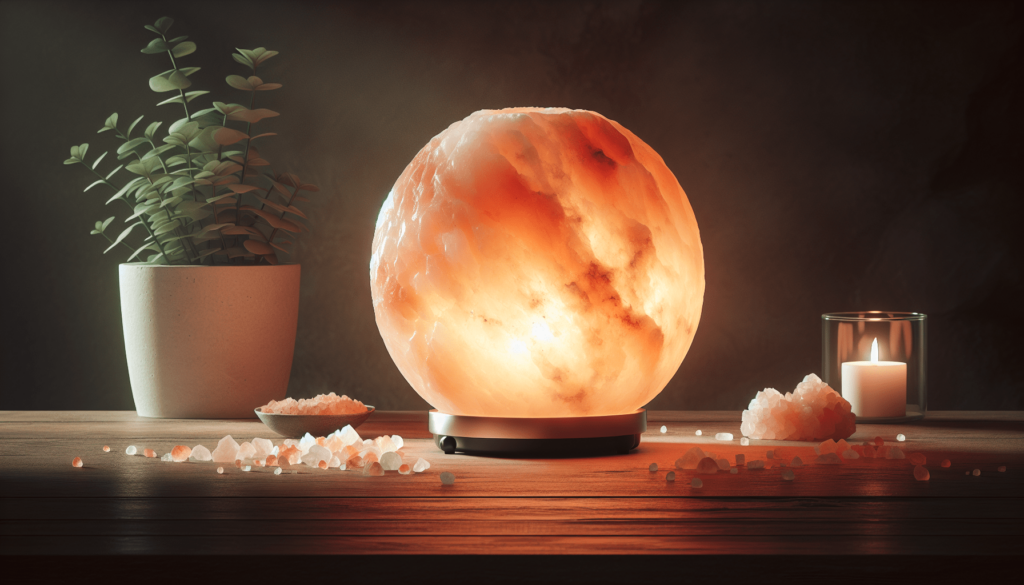

In a world increasingly conscious of wellness, natural remedies, and the quality of the air we breathe, certain objects capture our collective imagination with remarkable tenacity. Among these, the Himalayan salt lamp stands as a ubiquitous symbol of tranquility and purported purification. Its warm, amber glow, a soft counterpoint to the harsh blues of digital screens, has become a staple in homes, yoga studios, and mindful spaces around the globe. Carved from ancient salt deposits deep within the Khewra Salt Mine in Pakistan, these crystalline sentinels are lauded not just for their aesthetic appeal but for a more profound, almost mystical claim: that they actively purify the air, drawing toxins and allergens into their rosy depths, leaving behind an atmosphere of pristine freshness.
But beyond the captivating luminescence and the compelling narratives of enhanced well-being, a critical question lingers, demanding the discerning eye of scientific inquiry: Do Himalayan salt lamps truly purify the air, or are their acclaimed benefits more a testament to the power of placebo, aesthetic comfort, and savvy marketing? For the knowledgeable audience, accustomed to dissecting claims and seeking empirical evidence, this inquiry is not merely about dismissing a beloved household item but about understanding the intricate dance between ancient wisdom, modern science, and the pervasive human desire for a cleaner, healthier existence.
Let us embark on a journey to unravel the mystique of the Himalayan salt lamp, separating the shimmering folklore from the often-unseen realities of atmospheric chemistry and human perception.
The Allure of the Ancient Earth: A Narrative of Wellness
The story of the Himalayan salt lamp begins long before its contemporary rise to prominence. It whispers of geological epochs, of ancient seas evaporating to leave behind vast, mineral-rich salt beds, protected from millennia of pollution. This origin story imbues the lamps with an inherent sense of purity and natural power. When these blocks of salt are hollowed out and illuminated from within, they transform into radiant sculptures, their rough, unrefined surfaces glowing with an earthy warmth.
It is this visual appeal, coupled with the lamps’ perceived connection to nature, that initially draws many. The soft, diffuse light is a welcome respite from the often-overstimulating environments of modern life. Many users report an immediate sense of calm and relaxation upon introducing a salt lamp into their space. Anecdotal accounts abound: individuals claiming improved sleep, reduced allergy symptoms, fewer headaches, and a general feeling of lightness and clarity in the air. For some, the lamp becomes a focal point of their personal wellness ritual, a tangible symbol of their commitment to a healthier lifestyle.
This subjective experience, while powerful and valid in its own right, forms the bedrock of the salt lamp’s popular appeal. In a world where invisible pollutants—dust mites, pet dander, pollen, mold spores, volatile organic compounds (VOCs), electromagnetic fields (EMFs) from electronics—are increasingly blamed for a host of modern ailments, the idea of a simple, natural object that can quietly neutralize these threats is profoundly attractive. The narrative suggests that these lamps are not merely decorative but active agents in an unseen battle against environmental aggressors, working tirelessly to restore balance to our indoor ecosystems.
This compelling narrative, however, necessitates a closer look at the scientific premises upon which these claims rest. What are the hypothesized mechanisms by which a block of salt, warmed by a light bulb, is supposed to achieve such impressive feats of atmospheric cleansing?
The Scientific Premise: Hypothesized Mechanisms of Purification
Proponents of Himalayan salt lamps typically put forth two primary mechanisms to explain their air-purifying abilities: hygroscopy and negative ion emission.
1. Hygroscopy: The Salt’s Thirst for Water
The most widely cited mechanism is hygroscopy. Salt, by its very nature, is hygroscopic, meaning it attracts and absorbs water molecules from the surrounding air. The theory posits that the warmed salt lamp draws in ambient moisture, which carries with it airborne pollutants such as dust, pollen, pet dander, and even microscopic mold spores. These water-laden particles become trapped on the surface of the lamp. As the lamp heats up from the internal bulb, the water then evaporates back into the air, leaving the trapped pollutants—the "impurities"—adhered to the salt crystal. The cycle then repeats, continually drawing in moisture and its accompanying particulate matter, thus "purifying" the air.
This process sounds intuitively logical. We know salt absorbs moisture; anyone who has left a salt shaker open in humid weather can attest to its clumping. The logic extends that if moisture carries pollutants, and salt absorbs moisture, then salt must, by extension, absorb pollutants.
2. Negative Ion Emission: Recreating Nature’s Charge
The second, and perhaps more captivating, claim revolves around the emission of negative ions. The natural world is rich in negative ions—think of the invigorating air near a waterfall, a crashing ocean, or after a thunderstorm. These natural phenomena generate an abundance of negatively charged ions, which are essentially oxygen atoms with an extra electron. Conversely, environments heavy with electronic devices, pollution, and stale air are often rich in positively charged ions.
The theory suggests that positive ions are detrimental to human health, leading to fatigue, irritability, and exacerbating respiratory issues, as they are often associated with airborne allergens and pollutants. Negative ions, on the other hand, are believed to have a beneficial effect, improving mood, energy levels, and even aiding in the removal of airborne particulate matter. The idea is that negative ions attach themselves to positively charged pollutants (like dust, smoke, and dander), making them heavier and causing them to fall out of the air, rather than remaining suspended for inhalation.
Himalayan salt lamps are hypothesized to generate these beneficial negative ions through a combination of the warming process and the salt’s unique mineral composition. As the lamp heats, it’s thought that the salt crystal releases a small number of water molecules, and as these molecules interact with the salt and heat, negative ions are supposedly produced and dispersed into the surrounding air. This mechanism positions the salt lamp as a natural ionizer, replicating the refreshing feeling of a pristine outdoor environment within the confines of our homes.
These two mechanisms—hygroscopy and negative ion emission—form the scientific backbone of the salt lamp’s air-purifying claims. They offer a compelling, albeit simplified, explanation for how a simple block of salt could wield such environmental power. However, to truly assess their validity, we must move beyond hypothesis and delve into the scrutiny of empirical evidence, examining whether these proposed mechanisms translate into tangible, measurable air purification in a real-world setting.
Deconstructing the Claims: A Critical Look at the Evidence
With the hypothesized mechanisms laid bare, it’s time to apply the rigors of scientific skepticism. For a knowledgeable audience, anecdotal evidence, while persuasive, is not sufficient. We need to ask: Do these mechanisms operate at a scale and efficiency that can genuinely impact the air quality of an average room?
1. Hygroscopy: The Reality of Absorption and Release
While it is undeniably true that salt is hygroscopic, the practical implications of this property for air purification in a domestic setting are far more nuanced than the simple "attracts and traps" narrative suggests.
- Surface Area Limitation: A typical Himalayan salt lamp, even a large one, presents a relatively small surface area for moisture absorption compared to the vast volume of air in a room. To effectively remove significant quantities of airborne pollutants via hygroscopy, an object would need an enormous surface area or an extremely aggressive absorption rate, neither of which a salt lamp possesses. Compare this to a dedicated dehumidifier, which employs fans to actively draw large volumes of air over cold coils, condensing vast amounts of moisture. A salt lamp, by contrast, relies on passive diffusion.
- The Fate of Pollutants: The theory states that pollutants are trapped on the salt surface when the water evaporates. While some particulate matter might indeed adhere to the sticky, damp surface of a "sweating" salt lamp, the question remains: are these pollutants permanently sequestered? Or, as the lamp continues to cycle between absorbing and releasing moisture, are these trapped particles, especially lighter ones, simply re-released into the air, perhaps even concentrated, as the water evaporates? There is no established mechanism or empirical evidence to suggest that the salt crystal somehow chemically neutralizes or permanently binds these pollutants. Cleaning the lamp (wiping it down) might remove some surface dust, but this is a manual process, not an inherent function of the lamp’s "purification."
- The "Sweating" Phenomenon: Salt lamps are known to "sweat" or weep in humid environments. This is a clear demonstration of their hygroscopic nature. However, this sweating often indicates that the lamp is absorbing moisture to the point of saturation. If the lamp is consistently damp, its ability to continue absorbing new moisture (and thus new pollutants) diminishes. Furthermore, a perpetually damp salt surface could, paradoxically, become a breeding ground for certain types of mold or bacteria if not properly maintained, counteracting any theoretical purifying benefits.
- Comparison to Filters: Contrast the salt lamp’s passive, limited hygroscopic action with a HEPA (High-Efficiency Particulate Air) filter. HEPA filters are designed with intricate matrices of fibers that physically trap particulate matter down to 0.3 microns with 99.97% efficiency. They use powerful fans to draw large volumes of air through these filters. The salt lamp’s mechanism is fundamentally different and far less efficient. It acts more like a very, very small and passive surface for incidental dust collection, rather than an active air purification system.