
In the grand, ceaseless machinery of life, every living organism, from the simplest bacterium to the most complex human, operates under a fundamental imperative: to maintain itself against the relentless march of entropy. We are, in essence, self-repairing systems, constantly battling the forces of degradation, wear, and tear. Yet, even the most sophisticated engineering requires downtime for maintenance, for overhaul, for the intricate processes of repair and renewal. For biological systems, this essential downtime is encapsulated in a phenomenon so ubiquitous, yet so profoundly mysterious, that we often take it for granted: sleep.
The choice, for every cell, every tissue, every organ, and indeed, every organism, is stark and uncompromising: sleep or rust. To forgo the deep, restorative embrace of sleep is to condemn the intricate biological machinery to a slow, insidious process of corrosion, breakdown, and eventual failure. This isn’t merely a poetic metaphor; it is a biochemical reality, a cellular imperative etched into our very DNA. This article will embark on a journey deep into the heart of this critical link, unraveling the story of how rest orchestrates a symphony of cellular repair, fending off the "rust" that threatens to consume us.
Part 1: The Visible Wear and Tear – The "Rust" We See
Before we delve into the microscopic world of cellular repair, let us first acknowledge the macroscopic manifestations of its failure. We have all experienced the immediate consequences of a sleepless night: the sluggish mind, the frayed temper, the heavy-lidded eyes. These are the earliest flickers of rust appearing on the surface of our well-oiled machine.
Historically, the necessity of rest has been an intuitive understanding. Ancient texts, from Ayurvedic traditions to Hippocratic writings, allude to the restorative power of sleep, recognizing its role in healing and maintaining health. Yet, it is in the modern era, with its relentless pace and 24/7 demands, that the true cost of sleep deprivation has become alarmingly clear. We live in a society that often glorifies sleeplessness, equating it with productivity and dedication – a dangerous misconception that accelerates the rusting process.
Consider the immediate effects:
- Cognitive Decline: The brain, our most complex organ, is acutely sensitive to sleep deprivation. Attention wavers, memory consolidation falters, problem-solving skills diminish, and decision-making becomes impaired. It’s akin to trying to operate a computer with a corrupted hard drive – inputs are processed slowly, errors abound, and overall performance plummets. This isn’t just about feeling groggy; it’s about compromised neural pathways, an inability to clear metabolic byproducts, and a failure to consolidate the day’s learning.
- Emotional Dysregulation: Without adequate rest, our emotional thermostat breaks down. Minor irritations become major frustrations, anxiety levels spike, and the capacity for empathy diminishes. The prefrontal cortex, responsible for emotional regulation, becomes less active, while the amygdala, the brain’s fear center, goes into overdrive. The emotional machinery begins to corrode, leading to volatile reactions and impaired social interactions.
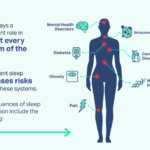
- Physical Symptoms: The body too, cries out for repair. Chronic fatigue becomes a persistent companion. The immune system, deprived of its nightly recalibration, weakens, making us more susceptible to infections. Metabolic processes go awry, leading to increased cravings for unhealthy foods and a predisposition to weight gain. Even our skin, the body’s largest organ, loses its luster, reflecting the systemic breakdown beneath.
These immediate consequences, while uncomfortable, are merely the superficial rust spots. The true danger lies deeper, in the insidious, long-term degradation that occurs when the nightly repair mechanisms are consistently neglected. From increased accident rates on the roads and in workplaces to the slow onset of chronic diseases, the societal and personal toll of chronic sleep deprivation is staggering. The machinery of life, without its nightly service, doesn’t just slow down; it actively begins to dismantle itself, piece by painstaking piece.
Part 2: Diving Deep into the Cellular Forge – The "Sleep" We Need
To truly understand why sleep is not a luxury but a biological imperative, we must venture into the microscopic world, where the battle against entropy is fought at the cellular and molecular levels. Here, sleep is revealed as a highly active, orchestrated state of repair, a cellular forge where the body diligently works to mend, restore, and rejuvenate itself.
The master conductor of this nightly symphony is the circadian rhythm, an internal biological clock roughly synchronized with the 24-hour day-night cycle. Governed by a small cluster of neurons in the hypothalamus called the suprachiasmatic nucleus (SCN) and regulated by "clock genes" (like Period and Cryptochrome), this rhythm dictates not just when we sleep, but also the optimal timing for various cellular processes, including repair. It’s an ancient evolutionary adaptation, ensuring that the energy-intensive processes of growth and repair happen when the organism is safest and most quiescent.
Sleep itself is not a monolithic state but a complex progression through distinct stages, each contributing uniquely to the repair agenda:
-
Non-Rapid Eye Movement (NREM) Sleep: Comprising about 75-80% of our sleep, NREM is further divided into three stages:
- N1 (Drowsiness): The transition from wakefulness to sleep.
- N2 (Light Sleep): Heart rate and breathing slow, body temperature drops. This stage prepares the body for deeper repair.
- N3 (Slow-Wave Sleep or Deep Sleep): This is the powerhouse of physical repair. During N3, the brain exhibits large, slow delta waves. This is when the body ramps up the production of growth hormone, crucial for tissue repair, muscle growth, and bone density. It’s also the primary stage for glymphatic system activation, a critical brain waste clearance mechanism we will explore shortly.
-
Rapid Eye Movement (REM) Sleep: Characterized by vivid dreams, muscle paralysis, and rapid eye movements, REM sleep accounts for 20-25% of our sleep. While NREM focuses on physical restoration, REM is predominantly associated with cognitive repair and emotional processing. It plays a vital role in memory consolidation, learning, and synaptic pruning – clearing out unnecessary neural connections to make room for new learning and optimize brain function.