
The relentless hum of modern life often comes with an unspoken, insidious soundtrack: the constant, low-level anxiety that permeates our daily existence. For many, particularly those capable of pregnancy, a significant portion of this mental noise originates from the intricate, often precarious dance of contraception. It’s a dance performed in the shadows of daily routines, in the quiet moments of intimacy, and in the anxious wait for a period that may or may not arrive on schedule. This isn’t merely a logistical challenge; it’s a profound psychological burden, a constant vigilance against a life-altering event.
Imagine, for a moment, the weight of this invisible backpack. It’s filled with forgotten pills, misplaced patches, the fear of an IUD shifting, the uncertainty of withdrawal, the expense of emergency contraception, and the ever-present shadow of an unintended pregnancy. For individuals who are child-free by choice, or who have completed their families, this burden can feel particularly heavy, a cruel irony that their deepest desire for autonomy is constantly undermined by the biological imperative and the tools designed to circumvent it.
This article delves into the profound, often underestimated psychological relief that a permanent contraceptive solution – be it a vasectomy for men or a tubal ligation/bilateral salpingectomy for women – can offer. It’s a journey from chronic stress and vigilance to a state of quiet liberation, a story of reclaiming mental space, enhancing intimacy, and ultimately, finding a deeper, more restorative peace. It is the narrative of individuals who finally choose to disarm the ticking clock of fertility, leading to a life where they can truly sleep better and stress less.
The Unseen Burden: A Life Lived on the Edge
To truly appreciate the psychological shift offered by permanent contraception, one must first understand the pervasive nature of the burden it alleviates. For decades, the primary responsibility for contraception has largely fallen upon those with uteruses. This historical imbalance has cultivated a unique mental landscape characterized by perpetual vigilance and a subtle, yet profound, undercurrent of anxiety.
Consider the daily ritual of a hormonal contraceptive user. The alarm clock rings, but before coffee or emails, there’s the pill. Missed it? A scramble to remember the protocol, the internal calculation of risk, the gnawing worry that lasts until the next period. For those using patches or rings, there’s the weekly change, the careful adherence to schedule. Even long-acting reversible contraceptives (LARCs) like IUDs, while offering significant convenience, come with their own anxieties: the initial insertion pain, the fear of expulsion, the occasional spotting that sends one down a rabbit hole of "what if" scenarios.
This isn’t merely about remembering a pill; it’s about the cognitive load associated with it. It’s the mental space occupied by monitoring side effects – the mood swings, the weight fluctuations, the acne, the headaches – and wondering if they are "normal" or indicative of something more sinister. It’s the careful planning around travel, ensuring refills, navigating different time zones. It’s the subtle disruption to spontaneity in intimate moments, where a momentary lapse in protection can overshadow connection.
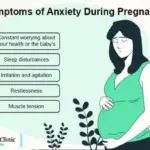
For individuals who are determined not to have children, or who feel their family is complete, this burden is amplified. Every period that is late, every symptom that mimics early pregnancy, triggers a cascade of panic. The joy of sex can be tainted by the underlying fear of its most profound consequence. This constant low-grade stress manifests in various ways: interrupted sleep, difficulty concentrating, irritability, and a general feeling of being "on edge." It’s the equivalent of driving with the brake pedal lightly pressed, always anticipating a sudden stop.
Beyond the individual, there’s a relational dynamic at play. While partners may offer support, the ultimate responsibility for pregnancy prevention often defaults to the person who would carry the pregnancy. This can lead to resentment, a feeling of being solely responsible for a shared outcome, and a subtle erosion of trust or shared intimacy if one partner feels the other is not equally invested in the preventative measures. The financial burden, too, is a quiet stressor – the monthly cost of pills, the co-pays for appointments, the potential cost of an unplanned pregnancy, or even the initial investment in a LARC.
This unseen burden, this life lived on the edge of "what if," slowly but surely erodes quality of life. It saps mental energy, dulls spontaneity, and prevents a full embrace of the present moment. It’s a testament to human resilience that so many navigate this terrain for years, even decades. But for those who discover a path out, the relief is not just palpable; it is transformative.
The Decision Point: A Path Towards Clarity
The journey towards considering permanent contraception is rarely sudden. More often, it’s a gradual accumulation of experiences, anxieties, and a growing clarity of personal desire. For many, it begins with a moment of exasperation – perhaps another missed pill, another pregnancy scare, or a particularly unpleasant side effect from a hormonal method. It might be spurred by a significant life event: the birth of a last child, reaching a certain age, or simply a profound realization that their life path does not, or no longer, includes childbearing.
This decision is deeply personal, yet it is often made within a complex societal framework that can resist such choices. The path is often fraught with internal and external challenges:
Internal Resistance:
- Societal Conditioning: From a young age, many are implicitly or explicitly taught that their worth is tied to their reproductive potential, especially for women. The idea of permanently closing that door can feel radical, even rebellious.
- Fear of Regret: This is perhaps the most significant internal hurdle. What if I change my mind? What if my partner leaves me and I want children with someone new? What if my existing children pass away? These are valid, human concerns, often amplified by medical professionals who, sometimes unintentionally, gatekeep access by emphasizing the permanence to an extreme degree.
- Identity Shift: For some, fertility is intertwined with their sense of self. Choosing permanent contraception can feel like shedding a part of that identity, requiring a re-evaluation of who they are and who they want to be.
External Challenges:
- Medical Gatekeeping: This is a persistent and infuriating obstacle for many. Individuals, particularly women and younger people (even those well into adulthood), often report being dismissed, questioned, or outright refused when seeking sterilization. Doctors may impose arbitrary age limits, require spousal consent (which is unethical and illegal in many places), or demand that patients already have children. This paternalistic approach undermines bodily autonomy and prolongs the period of stress. Men seeking vasectomies generally face less scrutiny, highlighting a continuing gender bias in reproductive healthcare.
- Partner Dynamics: A supportive partner can be a tremendous asset, engaging in open discussions and perhaps even considering a vasectomy themselves. However, a partner who is ambivalent or resistant can add another layer of complexity, forcing the individual to weigh their own desires against the relationship’s stability.
- Social Stigma: While less pronounced than in previous generations, a subtle stigma can still exist. Friends, family, or even strangers might offer unsolicited opinions, questioning the decision, implying selfishness, or warning of future regret.
Navigating this labyrinth requires resilience, self-advocacy, and a clear vision of one’s desired future. It often involves extensive research into the different procedures – understanding the relative invasiveness of a tubal ligation versus a bilateral salpingectomy (which removes the fallopian tubes entirely, significantly reducing ovarian cancer risk), or the simplicity of a vasectomy. It involves finding a compassionate and ethical healthcare provider who respects autonomous choices.
The "story" of this decision phase is often one of quiet determination. It’s the hours spent researching online forums, reading personal anecdotes, gathering courage to speak to a doctor, and perhaps, facing down a dismissive medical professional only to seek out another. It’s the internal monologue of weighing fears against desires, of asserting one’s right to control their own body and future. When the decision is finally made, and the appointment is booked, it’s not just a surgical procedure that has been scheduled; it’s a profound act of self-liberation.
The Surgical Threshold: A Moment of Transformation
The days leading up to the procedure, whether it’s a vasectomy or a salpingectomy, are often a mix of anticipation and a touch of nervousness. There’s the practical preparation – pre-op instructions, arranging transportation, taking time off work. But beneath the surface, there’s a powerful emotional current: the overwhelming sense of impending freedom.