
Cardiovascular disease (CVD) stands as the silent, relentless architect of human suffering and mortality, claiming millions of lives annually across the globe. For decades, the narrative of heart health has been dominated by cholesterol, blood pressure, and lifestyle choices. Yet, in the intricate symphony of human physiology, whispers from the scientific community are growing louder, suggesting an unsung hero, a nutrient often overshadowed by its more celebrated counterparts, may hold a crucial key to protecting our most vital organ: Vitamin K.
This isn’t a simple tale of a new miracle cure. Instead, it’s a deep dive into the fascinating, complex, and evolving understanding of a fat-soluble vitamin, revealing its surprising, multifaceted role beyond blood clotting. We embark on a journey, exploring the dual nature of Vitamin K, its intricate molecular mechanisms, the compelling evidence emerging from groundbreaking studies, and the challenges that still lie ahead in fully integrating it into the grand strategy against cardiovascular disease. For the knowledgeable mind, eager to grasp the nuances and the cutting edge of nutritional science, this story of Vitamin K and the heart is both profound and promising.
The Dual Nature of a Silent Guardian: K1 vs. K2
Our story begins with a necessary distinction, for Vitamin K is not a monolithic entity. It exists primarily in two main forms, phylloquinone (Vitamin K1) and menaquinone (Vitamin K2), each with distinct origins, metabolic pathways, and, crucially, different primary roles in human health.
Vitamin K1 (Phylloquinone): The Coagulation Commander
Phylloquinone, the form most widely known and studied for decades, is predominantly found in verdant green leafy vegetables such as spinach, kale, broccoli, and Swiss chard. Its traditional, and undeniably vital, role lies in the synthesis of several blood clotting factors in the liver. Without adequate K1, our ability to stop bleeding is severely compromised, making it an indispensable nutrient for survival. This function has largely defined our understanding of Vitamin K, often leading to an oversight of its other critical contributions.
Vitamin K2 (Menaquinone): The Vascular Alchemist
Menaquinone, on the other hand, is the star of our cardiovascular narrative. Unlike K1, which is directly absorbed from plant sources, K2 is a family of compounds (menaquinones) with varying side chain lengths, denoted as MK-n (e.g., MK-4, MK-7, MK-9).
- MK-4 is found in animal products like meat, eggs, and dairy, and can also be synthesized endogenously from K1 in some tissues.
- MK-7, MK-8, and MK-9 are primarily produced by bacteria and are abundant in fermented foods, most notably the Japanese superfood natto (a potent source of MK-7), as well as certain cheeses and fermented dairy products.
The critical difference lies in their bioavailability and tissue distribution. While K1 is rapidly cleared by the liver for clotting factor synthesis, K2, particularly the longer-chain menaquinones like MK-7, boasts a much longer half-life, allowing it to circulate throughout the body and reach extrahepatic tissues, including the bones and, most importantly for our story, the arterial walls. This extended presence is what allows K2 to exert its profound effects on cardiovascular health, a role entirely distinct from its K1 cousin.
Unveiling the Mechanisms: The K2 Symphony Against Calcification
The primary villain in our cardiovascular drama is arterial calcification – the hardening and stiffening of arteries due to the deposition of calcium phosphate crystals within their walls. This process, once thought to be a passive consequence of aging, is now recognized as an active, regulated, and pathological process that accelerates atherosclerosis, increases arterial stiffness, and significantly elevates the risk of heart attacks, strokes, and overall cardiovascular mortality.
Here is where Vitamin K2 enters the stage, conducting a remarkable molecular symphony to counteract this insidious process. Its mechanism revolves around its essential role as a co-factor for a class of enzymes called gamma-glutamyl carboxylases (GGCX). These enzymes activate specific Vitamin K-dependent proteins (VKDPs) by carboxylating their glutamic acid residues, enabling them to bind calcium. Without sufficient K2, these proteins remain inactive and functionally inert.
The Star Performer: Matrix Gla Protein (MGP)
Among the numerous VKDPs, Matrix Gla Protein (MGP) is arguably the most critical player in preventing vascular calcification. MGP is a potent inhibitor of soft tissue calcification, synthesized by vascular smooth muscle cells (VSMCs) and chondrocytes. However, for MGP to function correctly, it must be activated by Vitamin K2 through carboxylation.
- Active MGP (carboxylated): When sufficient K2 is present, MGP is fully carboxylated, allowing it to bind free calcium ions and effectively sequester them, preventing their deposition within the arterial walls. It acts like a molecular policeman, patrolling the vasculature and removing calcium before it can cause damage.
- Inactive MGP (uncarboxylated): In the absence of adequate K2, MGP remains largely uncarboxylated and thus inactive. This inactive MGP cannot bind calcium, leaving the arterial walls vulnerable to calcification. The accumulation of inactive MGP is increasingly recognized as a biomarker for Vitamin K inadequacy and a predictor of cardiovascular risk.
The significance of MGP cannot be overstated. Studies on MGP knockout mice (mice genetically engineered to lack MGP) exhibit severe and rapid arterial calcification, leading to premature death, unequivocally demonstrating MGP’s indispensable role in vascular health.
Beyond MGP: A Broader Impact
While MGP takes center stage, K2’s influence extends to other areas relevant to cardiovascular health:
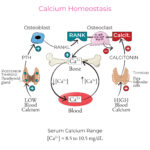
- Osteocalcin: Another key VKDP, osteocalcin, is crucial for bone mineralization. K2 activates osteocalcin, which then helps incorporate calcium into the bone matrix. This dual action – removing calcium from arteries and depositing it into bones – highlights K2’s role in calcium homeostasis, directing calcium to where it’s needed (bones) and away from where it’s harmful (arteries).
- Inflammation and Oxidative Stress: Emerging research suggests that K2 may also exert anti-inflammatory and antioxidant effects, both of which are critical in the pathogenesis of atherosclerosis. Chronic low-grade inflammation and oxidative stress contribute significantly to endothelial dysfunction and plaque formation.
- Endothelial Function: A healthy endothelium (the inner lining of blood vessels) is vital for vascular health. K2 may help maintain endothelial integrity and function, further contributing to its cardioprotective profile.