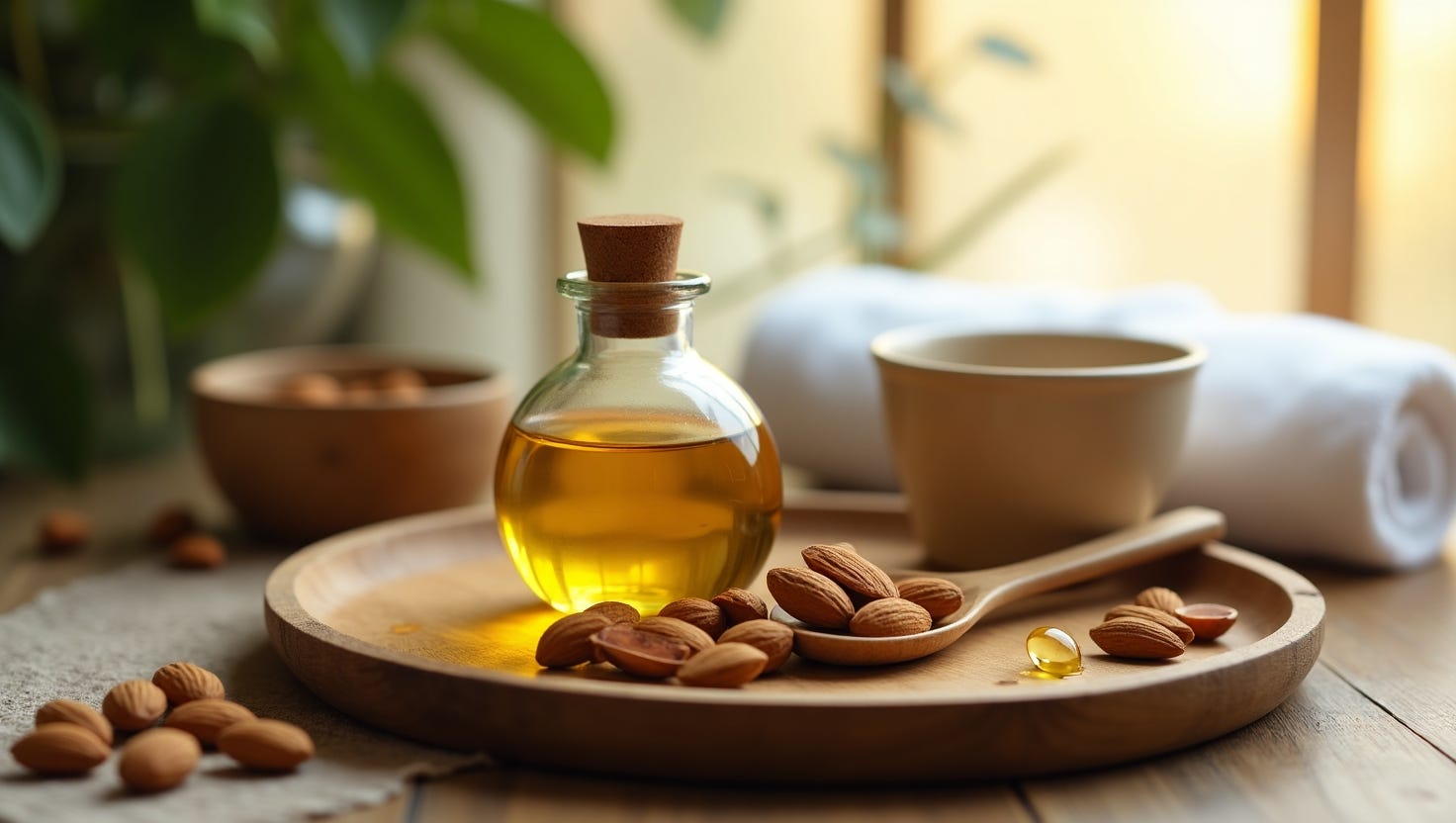

In the vast and ever-evolving landscape of skincare, where trends flicker and fade with the seasons, a quiet revolution has been unfolding. It’s not driven by laboratories synthesizing new compounds or by exotic, rarely seen botanicals from remote corners of the world. Instead, this seismic shift is rooted in the humble, yet profoundly potent, goodness of nature’s own larder: the sweet almond and the majestic walnut. Often relegated to the periphery, overshadowed by flashier ingredients or misunderstood as mere culinary staples, the oils extracted from these ancient nuts are, in truth, skincare game changers – a duo of golden elixirs and emerald secrets poised to redefine how we nourish, protect, and rejuvenate our skin.
To understand their profound impact, we must embark on a journey that spans millennia, from the sun-drenched orchards of antiquity to the sophisticated laboratories of modern dermatology. It’s a story of rediscovery, where ancestral wisdom meets cutting-edge science, validating what our forebears intuitively understood about the restorative power of these botanical treasures. For the discerning individual, the knowledgeable seeker of true efficacy, this narrative will illuminate not just what these oils do, but why they do it, delving into the intricate biochemical symphony that makes them indispensable allies in the quest for radiant, resilient skin.
Part 1: Echoes of Antiquity – The Timeless Allure of Nut Oils
Long before the advent of clinical trials and dermatological breakthroughs, humanity relied on the earth’s bounty for healing and beauty. The history of almond and walnut oils is deeply interwoven with the very fabric of civilization, testament to their enduring value.
The Sweet Embrace of Almond Oil: A Legacy of Gentle Nourishment
Prunus Amygdalus Dulcis, the sweet almond, boasts a heritage steeped in luxury and holistic wellness. Originating in the Middle East and South Asia, almond trees were cultivated as early as 4000 BC. Ancient Egyptians, renowned for their elaborate beauty rituals, revered almond oil. Cleopatra herself is fabled to have incorporated it into her daily regimen, valuing its softening and moisturizing properties. Hieroglyphics depict its use not only as a skin emollient but also as a carrier for fragrant essential oils, forming the basis of early perfumes and anointing oils.
The Greeks and Romans adopted almond oil with equal enthusiasm, employing it for massage, skin conditioning, and even as a gentle laxative. In Ayurvedic medicine, the traditional Indian system of healing, almond oil has been a staple for centuries. It’s categorized as a ‘Rasayana,’ a rejuvenating tonic, prized for its ability to balance Vata (dryness, roughness) and Pitta (inflammation, irritation) doshas, making it ideal for soothing sensitive, dry, or inflamed skin. Traditional Chinese Medicine also recognized its benefits for skin and hair, often incorporating it into herbal preparations for its nourishing qualities. Across these diverse cultures, almond oil’s reputation as a supremely gentle, yet profoundly effective, skin conditioner was firmly established. Its mildness made it suitable even for infants, a testament to its non-irritating nature.
The Robust Resonance of Walnut Oil: A Rediscovery for Modern Skin
The walnut, from the noble Juglans Regia tree, offers a slightly different, though equally compelling, historical narrative. Walnuts themselves have been cultivated for thousands of years, with evidence pointing to their presence in ancient Persia and China. Primarily valued for their nutritious nuts and rich, earthy oil in culinary applications, walnut oil’s topical use for skincare, while present, was perhaps less extensively documented than almond oil’s.
However, traditional folk medicine across Europe and Asia frequently utilized walnut leaves, bark, and oil for their medicinal properties. It was often applied to soothe skin irritations, treat minor wounds, and address inflammatory conditions like eczema and fungal infections. The rich green hue of unrefined walnut oil, indicative of its chlorophyll content, hinted at its vitality. Its use in ancient Greece for treating various ailments, and in medieval Europe for its purported anti-inflammatory effects, suggests an intuitive understanding of its skin-benefiting compounds, even if the precise science remained elusive.
The modern rediscovery of walnut oil as a dedicated skincare ingredient is a testament to contemporary research unearthing the full spectrum of its unique biochemical profile. What was once a secondary application or a folk remedy is now being recognized for its powerful anti-inflammatory, antioxidant, and regenerative capabilities, positioning it as a potent ally for stressed, compromised, or aging skin.
Part 2: The Alchemy of Nature – A Deep Dive into Biochemical Composition
To truly grasp why almond and walnut oils are skincare game changers, we must move beyond anecdotal history and delve into their molecular architecture. These are not merely inert emollients; they are complex matrices of fatty acids, vitamins, minerals, and potent bioactive compounds, each playing a crucial role in skin health.
At their core, carrier oils like almond and walnut are primarily composed of triglycerides, which are esters derived from glycerol and three fatty acids. It is the specific profile and proportion of these fatty acids, along with their unsaponifiable components (the compounds that don’t turn into soap when exposed to alkali), that dictate an oil’s unique properties.
The Golden Elixir: Unpacking Sweet Almond Oil (Prunus Amygdalus Dulcis Oil)
Sweet almond oil is celebrated for its balanced composition, making it universally beneficial and particularly well-suited for sensitive and dry skin types.
-
Key Fatty Acids:
- Oleic Acid (Omega-9 Monounsaturated Fatty Acid) – ~62-76%: This is the dominant fatty acid in almond oil. Oleic acid is a fantastic emollient, meaning it softens and smooths the skin. Crucially, its monounsaturated structure allows it to penetrate the skin’s lipid barrier effectively, delivering nutrients deeper and enhancing the absorption of other ingredients. It helps to reinforce the skin’s natural barrier, reducing trans-epidermal water loss (TEWL) and locking in moisture. Its non-comedogenic nature for most skin types makes it a safe bet.
- Linoleic Acid (Omega-6 Polyunsaturated Fatty Acid) – ~20-30%: An essential fatty acid (EFA), meaning the body cannot synthesize it and must obtain it from external sources. Linoleic acid is a vital component of ceramides, which are lipids that make up a significant portion of the skin barrier. A deficiency in linoleic acid can lead to a compromised barrier, dryness, and even acne. By replenishing linoleic acid, almond oil helps to strengthen the skin barrier, reduce inflammation, and normalize sebum production, making it beneficial for various skin concerns, including acne.
- Palmitic Acid (~4-9%) & Stearic Acid (~1-3%) (Saturated Fatty Acids): These saturated fatty acids contribute to the oil’s emollience and stability. They form a protective layer on the skin’s surface, further preventing moisture loss and providing a smooth feel.
-
Vitamins & Antioxidants:
- Vitamin E (Alpha-Tocopherol): Almond oil is a rich source of this potent fat-soluble antioxidant. Vitamin E is crucial for protecting the skin from oxidative stress caused by free radicals generated by UV radiation, pollution, and other environmental aggressors. It helps to maintain cell integrity, reduce inflammation, and support wound healing. Its photoprotective qualities help prevent premature aging.