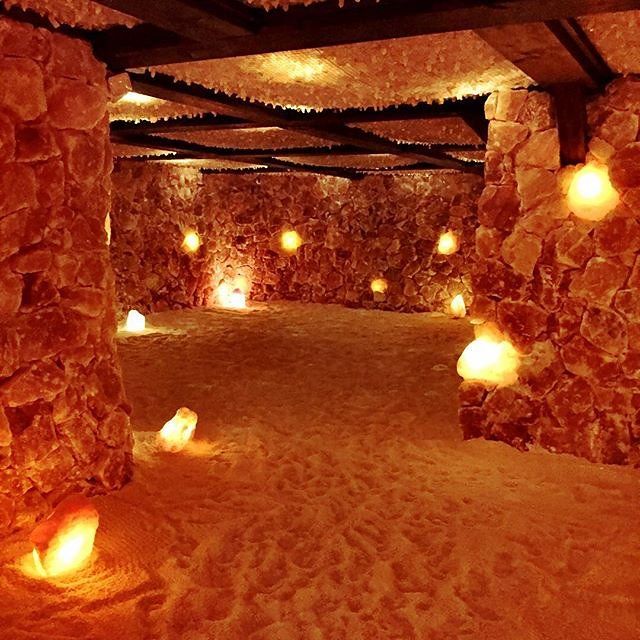

The air in the Himalayan salt cave hums with a quiet, almost ancient energy. Soft, diffused light filters through the rose-hued crystals that line the walls, casting a warm, ethereal glow. The air, noticeably different from the cacophony of modern life outside, carries a subtle, mineral tang, a whisper of the earth’s deep secrets. Here, amidst the serene beauty of what often feels like a crystalline labyrinth, countless individuals seek solace, relaxation, and, perhaps most compellingly, a tangible improvement in their respiratory health.
For centuries, whispers have circulated through mountain villages and mining communities about the healing properties of salt-rich environments. Today, these whispers have coalesced into a global wellness phenomenon: halotherapy, most commonly experienced in meticulously constructed Himalayan salt caves. But beyond the undeniable aesthetic appeal and the immediate sense of calm, can these pink-hued sanctuaries truly offer a tangible benefit to our lungs and airways? Can the journey into this mineral wonderland be more than just a momentary escape, but a genuine path to better breathing?
To unravel this complex question, we must embark on a journey ourselves – a journey through history, through the intricate mechanisms of our respiratory system, through the promises of alternative medicine, and into the often-challenging landscape of scientific inquiry. Our audience, knowledgeable and discerning, seeks not just anecdotes, but a nuanced exploration, a story woven from the threads of ancient wisdom, modern science, and the very human quest for well-being.
The Allure of the Pink Glow: A Sensory Introduction
Step into a salt cave, and the first thing that strikes you is the visual spectacle. Walls crafted from immense, rough-hewn blocks of Himalayan salt, often glowing from behind with hidden lights, create a sense of being inside a geological wonder. The floor might be covered in a fine layer of granular salt, crunching softly underfoot. The air, usually kept at a comfortable temperature and humidity, feels remarkably clean and dry. There’s often a faint, almost imperceptible scent – a mineral freshness.
Beyond the aesthetics, there’s a profound sense of tranquility. The dim lighting, the absence of electronic distractions, and the gentle, almost sacred atmosphere encourage introspection and relaxation. For many, this immediate shift in environment is itself a form of therapy, a respite from the relentless stimulation of daily life. This initial experience, the sheer sensory pleasure and stress reduction, is an undeniable component of the salt cave’s appeal, setting the stage for any potential physiological benefits. It’s a journey into a space designed for quiet contemplation, where the body and mind are encouraged to slow down and simply be.
Halotherapy: Unpacking the Core Concept
The scientific term for salt therapy is halotherapy, derived from the Greek word "halos," meaning salt. While salt caves offer a natural form of exposure to salt, modern halotherapy typically involves a controlled environment where a halogenerator disperses fine, dry salt particles into the air. These particles, typically micronized sodium chloride, are inhaled, aiming to reach the deepest parts of the respiratory system.
There are generally two types of halotherapy:
- Dry Halotherapy: This is the most common form, used in salt caves and specialized rooms. A halogenerator grinds pharmaceutical-grade salt into microscopic particles (usually 0.5-5 microns) and disperses them into the air. The concentration and duration are carefully controlled. This is the primary focus when discussing salt caves and respiratory health, as the "cave" environment is designed to enhance this dry salt exposure.
- Wet Halotherapy: This involves the use of saline solutions, such as gargles, nasal irrigation, or nebulizers. While effective for localized issues, it’s distinct from the atmospheric exposure of a salt cave.
The key to the proposed respiratory benefits of dry halotherapy lies in the microscopic size of the salt particles. These particles are small enough to bypass the body’s natural filtering mechanisms in the upper respiratory tract and penetrate deep into the bronchi and bronchioles, even reaching the alveoli in some cases. It’s this deep penetration that is believed to facilitate the therapeutic effects.
A Journey Through Time: The Historical Roots of Salt Therapy
The concept of salt as a healing agent is not new; it’s a story as old as human civilization itself. Ancient Greeks, Romans, and Egyptians all recognized the antiseptic and anti-inflammatory properties of salt, using it for wound care, preserving food, and even in rudimentary respiratory treatments.
However, the specific narrative of salt caves and respiratory health truly begins in 19th-century Eastern Europe. The story is often attributed to Dr. Feliks Boczkowski, a Polish physician who, in 1843, observed that salt mine workers at the Wieliczka Salt Mine near Krakow, Poland, exhibited remarkably healthy respiratory systems. While the general population suffered from common lung ailments, the miners, despite their arduous work, seemed to be immune. Boczkowski attributed this phenomenon to the constant inhalation of salt-laden air within the mines and subsequently established the first therapeutic salt clinic at the mine.
This observation gave birth to speleotherapy, or "cave therapy," where patients would spend extended periods in natural salt caves or mines. Over the following decades, speleotherapy gained traction, particularly in Eastern European countries like Russia, Ukraine, and Hungary, where numerous salt mines were converted into sanatoriums. These natural environments, with their stable microclimate, cool temperatures, high humidity, and airborne salt particles, were believed to offer significant relief for conditions like asthma, bronchitis, and allergies.
The modern salt cave, with its constructed walls of Himalayan salt and controlled halogenerators, is a direct descendant of these historical practices. It’s an attempt to replicate and refine the beneficial microclimate of natural salt mines, making it accessible to a wider population without requiring a journey deep underground. This historical context imbues the modern salt cave experience with a rich narrative, connecting contemporary wellness seekers to centuries of traditional wisdom.
The Proposed Mechanisms: How Does Salt Work its Magic?
For the knowledgeable audience, the "story" isn’t complete without understanding the proposed scientific mechanisms behind halotherapy. If salt caves are more than just a pretty place to relax, how exactly are they supposed to improve respiratory health? The theories center on several key properties of dry salt particles:
-
Mucolytic Action (Mucus Thinning): This is perhaps the most widely cited mechanism. Salt is hygroscopic, meaning it attracts water. When microscopic salt particles are inhaled and settle on the mucus lining of the airways, they are thought to draw water into the mucus. This increased hydration thins the mucus, making it less viscous and easier to clear. For individuals with conditions like asthma, COPD, or cystic fibrosis, where mucus can be thick and tenacious, this mucolytic effect could be highly beneficial, reducing congestion and improving airway patency.
-
Anti-inflammatory Effects: Chronic inflammation is a hallmark of many respiratory diseases. It causes swelling of the airway lining, narrowing the passages and making breathing difficult. Salt is believed to have anti-inflammatory properties. When inhaled, the salt particles may help to reduce inflammation in the respiratory tract, thereby easing airway constriction and improving airflow. This could be particularly relevant for conditions like asthma and chronic bronchitis, where inflammation plays a central role.