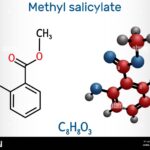

Beneath the emerald canopy of North American forests, amidst the cool shade and earthy aroma of decaying leaves, a diminutive plant whispers ancient secrets of solace. Its glossy, dark green leaves, often hidden by moss and fallen debris, hold a potent essence, a fragrant balm that has soothed aches and pains for millennia. This unassuming herb is Gaultheria procumbens, commonly known as wintergreen, checkerberry, or teaberry, and its story is a fascinating odyssey from indigenous wisdom to modern pharmaceutical science, a tale of "liquid relief" distilled from nature’s own pharmacy.
This article embarks on a deep dive into the analgesic properties of wintergreen leaves, unraveling the narrative of its discovery, the intricate chemistry of its active compounds, the elegant mechanisms by which it alleviates pain, and the crucial considerations for its safe and effective use. For the knowledgeable audience, this is not merely a recounting of facts, but an exploration of the intertwined histories of human suffering and botanical ingenuity, a story that bridges traditional ethnobotany with contemporary pharmacology.
The Whispering Woods: An Ethnobotanical Legacy
Our story begins not in a laboratory, but in the dappled light of primeval forests, where indigenous peoples developed an intimate understanding of the plant kingdom. For countless generations, various Native American tribes, including the Cherokee, Iroquois, Ojibwe, and Delaware, revered wintergreen for its diverse medicinal properties. They recognized its distinctive aroma – a sweet, minty, camphoraceous scent – as a signature of its power.
The Cherokee, for instance, employed wintergreen in a multitude of ways. Infusions of the leaves were consumed as a tea to alleviate general body aches, fevers, and even respiratory ailments. The plant’s anti-inflammatory properties were recognized through its traditional use in treating joint pain and muscle soreness. Poultices made from crushed leaves were applied directly to swollen joints, sprains, and bruises, drawing upon what we now understand as its topical analgesic effects. They intuitively understood the counter-irritant action, where the initial tingling sensation distracted from deeper, more persistent pain.
The Iroquois similarly utilized wintergreen for its pain-relieving capabilities, particularly for rheumatic conditions and back pain. They also valued it for its carminative properties, using it to soothe digestive upsets, and as a diuretic. The Ojibwe, known for their extensive knowledge of medicinal plants, incorporated wintergreen into their pharmacopoeia for headaches, colds, and as a tonic. This widespread, consistent use across diverse tribal cultures underscores the plant’s efficacy and the depth of traditional ecological knowledge.
As European settlers arrived, they quickly learned from their indigenous neighbors, adopting many native remedies. Wintergreen, with its pleasant taste and demonstrable effects, quickly became a popular "tea berry," consumed for both its flavor and its perceived health benefits. Early American herbalists and physicians began to document its uses, laying the groundwork for its eventual scientific investigation. The transition from folk remedy to an object of scientific curiosity had begun, driven by the persistent human quest for relief from pain.
The Alchemist’s Pursuit: Unveiling Methyl Salicylate
The turning point in wintergreen’s story from a revered folk medicine to a scientifically validated analgesic came with the advent of organic chemistry in the 19th century. Scientists, intrigued by the potent and distinct aroma of wintergreen oil, began to investigate its chemical composition. The challenge was to isolate the active principle responsible for its therapeutic effects.
In 1843, the French chemist Auguste Cahours successfully isolated a pure compound from wintergreen oil, which he named "salicylate de méthyle," or methyl salicylate. This was a monumental discovery, for it identified the primary constituent – making up over 98% of the essential oil – responsible for wintergreen’s characteristic scent and, crucially, its medicinal properties.
The discovery of methyl salicylate was particularly significant because of its close chemical relationship to salicylic acid. Salicylic acid itself had been isolated earlier from willow bark (Salix alba), another plant with a long history of pain relief and fever reduction. It was known to be the active component responsible for the therapeutic effects of willow bark. Methyl salicylate is essentially an ester of salicylic acid and methanol. This chemical kinship immediately suggested a shared pharmacological profile.
The connection deepened further with the synthesis of acetylsalicylic acid, commonly known as aspirin, by Felix Hoffmann at Bayer in 1897. Aspirin is a derivative of salicylic acid, designed to reduce the gastric irritation often associated with salicylic acid itself. Thus, wintergreen’s active compound, methyl salicylate, stands as a direct botanical cousin to one of the most widely used and effective pharmaceutical analgesics in history. This lineage highlights nature’s pioneering role in providing the blueprints for modern medicine.
Methyl salicylate can be obtained naturally through the steam distillation of wintergreen leaves, yielding a clear, colorless to pale yellow essential oil. However, due to the high demand and the relatively low yield from wild harvesting, much of the methyl salicylate used commercially today is synthesized in laboratories. Both natural and synthetic forms are chemically identical and possess the same therapeutic properties, though proponents of natural products sometimes argue for subtle differences in efficacy or synergistic effects from other minor compounds in the natural oil. Regardless of its origin, methyl salicylate became the "liquid relief" in question, ready for deeper scientific scrutiny.
The Physician’s Prescription: Mechanisms of Action
Understanding how wintergreen leaves, specifically their methyl salicylate content, exert their analgesic effects requires a journey into the intricate world of human physiology and pharmacology. The primary mode of action is through its conversion to salicylic acid within the body, which then acts as a non-steroidal anti-inflammatory drug (NSAID). However, methyl salicylate also possesses unique properties that contribute to its topical efficacy.
Topical Application: The Counter-Irritant and Vasodilator Effect
When wintergreen essential oil or methyl salicylate-containing preparations are applied to the skin, several immediate effects occur, contributing to its designation as a "counter-irritant."
- Cutaneous Absorption: Methyl salicylate is highly lipophilic (fat-soluble), allowing it to readily penetrate the epidermal barrier and be absorbed through the skin into the underlying tissues. This direct delivery to the site of pain is a key advantage of topical formulations.
- Counter-Irritation: This is the most immediate and noticeable effect. Methyl salicylate stimulates nerve endings in the skin, producing a sensation of warmth, tingling, and mild irritation. This local irritation distracts the brain from the deeper, more severe pain originating from muscles, joints, or tendons. It essentially "overloads" the pain receptors, shifting the perception of discomfort from the deeper tissue to the surface. This mechanism is not about eliminating the cause of pain, but about altering its perception.
- Vasodilation: The stimulation of nerve endings and the subsequent release of local mediators lead to vasodilation – the widening of blood vessels in the treated area. Increased blood flow brings more oxygen and nutrients to the site, and importantly, helps to carry away metabolic waste products that can contribute to pain and inflammation. This enhanced circulation can also aid in the removal of inflammatory mediators, further contributing to pain relief.
Systemic Action: The NSAID Pathway
Once absorbed through the skin, methyl salicylate undergoes hydrolysis – a chemical reaction with water – within the body, primarily in the bloodstream and liver. This reaction cleaves the ester bond, releasing salicylic acid and methanol. While methanol is a toxic byproduct, the small quantities produced from therapeutic topical application are generally well-tolerated and metabolized. It is the salicylic acid that then exerts the systemic analgesic and anti-inflammatory effects, mirroring those of oral aspirin.
The mechanism of salicylic acid is well-established and central to the action of NSAIDs:
- Cyclooxygenase (COX) Inhibition: Salicylic acid acts as a non-selective inhibitor of cyclooxygenase enzymes, specifically COX-1 and COX-2. These enzymes are crucial in the biosynthesis of prostaglandins, thromboxanes, and prostacyclins from arachidonic acid.
- COX-1: This isoform is constitutively expressed in most tissues and plays a role in "housekeeping" functions, such as protecting the gastric lining, maintaining renal blood flow, and facilitating platelet aggregation. Inhibition of COX-1 can lead to side effects like gastrointestinal irritation and bleeding.