
For many, the mention of Artemisia vulgaris conjures images of ancient rituals, smoldering cones of dried herbs, and the distinct, earthy aroma of moxibustion. Indeed, this practice, a cornerstone of Traditional Chinese Medicine (TCM), has indelibly linked mugwort, as it is commonly known, with the application of heat to acupuncture points, promoting circulation and alleviating pain. Yet, to confine Artemisia vulgaris solely to the realm of moxa is to overlook a vast, verdant landscape of therapeutic potential, a botanical story whispered through millennia and now slowly being deciphered by modern science.
This is the story of a plant that has worn many masks: protective charm, culinary herb, visionary ally, and potent medicine. It is a journey that transcends cultural boundaries and scientific disciplines, revealing a complex phytochemical profile and a spectrum of applications that extend far beyond the plume of smoke. For the knowledgeable seeker, mugwort offers an invitation to delve deeper, to peel back the layers of tradition and folklore, and to discover the profound therapeutic properties that have made it an enduring companion to humanity.
A Journey Through Time: Mugwort’s Enduring Legacy
The tale of Artemisia vulgaris begins not in a sterile laboratory, but in the fertile soils of antiquity, where humans first learned to observe, experiment, and derive sustenance and healing from the natural world. Mugwort’s very name, Artemisia, pays homage to Artemis, the Greek goddess of the hunt, wilderness, and childbirth, hinting at its ancient association with women’s health and protection.
Across continents, its significance resonated deeply. In ancient Egypt, traces of Artemisia species have been found in tombs, suggesting its use in rituals or embalming. The Roman naturalist Pliny the Elder documented its use by soldiers, who would place mugwort in their sandals to ward off fatigue during long marches – an early recognition of its potential analgesic and invigorating properties.
In medieval Europe, mugwort became a ubiquitous presence in the home and apothecary. It was considered a powerful protective herb, hung above doorways to ward off evil spirits, and carried as a charm against misfortune, illness, and witchcraft. Its association with dreams and divination grew, leading to its inclusion in "dream pillows" to induce vivid and prophetic slumber. For women, it was a trusted ally, employed to regulate menstrual cycles, ease childbirth, and support postpartum recovery – a testament to its emmenagogue and uterine tonic qualities, though often steeped in folklore rather than physiological understanding. Herbalists like Hildegard von Bingen extolled its virtues, prescribing it for digestive complaints, nervous disorders, and as a general tonic.
Simultaneously, in the East, Artemisia vulgaris (or closely related species like Artemisia argyi) was being meticulously integrated into the sophisticated medical systems of China, Korea, and Japan. Here, it was primarily recognized for its warming properties, becoming the star of moxibustion. Ancient texts like the Huangdi Neijing (The Yellow Emperor’s Classic of Internal Medicine), dating back over two millennia, describe its application for a wide array of conditions, particularly those characterized by cold, dampness, and stagnation. But even in these traditions, its oral consumption for digestive issues, pain, and as a general fortifier was also documented, demonstrating a broader understanding of its internal actions.
The Age of Enlightenment and the rise of modern pharmacognosy saw a shift in Western medicine, moving away from empirical herbalism towards isolated compounds and standardized drugs. Many traditional herbs, including mugwort, were relegated to the realm of "folk medicine" or forgotten altogether. Yet, its use persisted in rural communities and traditional healing practices, a quiet testament to its efficacy and the deep-seated wisdom passed down through generations.
Today, as scientific inquiry increasingly turns its gaze towards ethnobotanical knowledge, mugwort is experiencing a renaissance. Researchers are now applying modern analytical techniques to validate centuries of anecdotal evidence, revealing a complex symphony of compounds responsible for its multifaceted therapeutic profile.
Botanical Identity: Unveiling the Plant
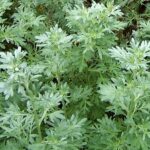
Before we delve into its chemistry, let’s ground ourselves in the physical reality of Artemisia vulgaris. A member of the vast Asteraceae (daisy) family, mugwort is a tenacious perennial herb native to temperate regions of Europe, Asia, and North Africa, though it has naturalized across much of the world, often found colonizing disturbed ground, roadsides, and meadows.
It typically grows to a height of 1 to 2 meters, boasting sturdy, reddish-purple stems. Its leaves are deeply lobed and pinnate, dark green on the upper surface and distinctly silvery-white and fuzzy on the underside, a characteristic that aids in identification. The scent, especially when crushed, is aromatic, bitter, and somewhat camphorous – a tell-tale sign of its rich volatile oil content. In late summer, it produces small, inconspicuous yellowish or reddish-brown flower heads, often in elongated panicles.
This ubiquitous nature and resilient spirit are symbolic of its enduring presence in human history. It thrives where other plants struggle, much like it has persisted in the face of changing medical paradigms. Its very appearance hints at its internal complexity: the contrasting colors of its leaves, the robustness of its stem, and the subtle but powerful aroma allude to the potent compounds hidden within.
The Alchemist’s Brew: Decoding Artemisia’s Phytochemistry
The therapeutic prowess of Artemisia vulgaris lies in its intricate "alchemist’s brew" of phytochemical constituents. Modern analytical techniques have allowed scientists to isolate and identify hundreds of compounds, each contributing to the plant’s overall pharmacological activity, often in synergistic ways. For a knowledgeable audience, understanding these categories is key to appreciating mugwort’s diverse actions.
-
Volatile Oils (Essential Oils): These are perhaps the most recognized components, responsible for mugwort’s distinctive aroma and many of its immediate effects. Key compounds include:
- Thujone: A monoterpene ketone, thujone is arguably the most famous (and infamous) constituent of Artemisia species, including wormwood (Artemisia absinthium). While present in A. vulgaris, its concentration is generally lower than in wormwood. Thujone acts on GABA receptors in the brain, and in high doses, it can be neurotoxic, causing convulsions. However, at lower, therapeutic doses, it is believed to contribute to mugwort’s carminative, antispasmodic, and potentially psychoactive (dream-enhancing) properties. It is crucial to note that internal use of mugwort, especially extracts, should be approached with caution due to thujone.
- Cineole (Eucalyptol): Known for its expectorant and anti-inflammatory properties, cineole contributes to mugwort’s respiratory benefits.
- Camphor: Another terpene with stimulating, rubefacient (skin-warming), and antimicrobial actions.
- Borneol, Linalool, Pinene: These contribute to the overall aroma and possess various properties including anti-inflammatory, antimicrobial, and sedative effects.
-
Flavonoids: These are a large group of polyphenolic compounds widely distributed in plants, known for their powerful antioxidant, anti-inflammatory, and neuroprotective properties. Mugwort is rich in various flavonoids, including:
- Quercetin: A potent antioxidant and anti-inflammatory agent, often studied for its cardiovascular and anti-allergy benefits.