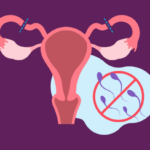
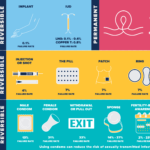
The human body, in its intricate design, often holds secrets that only time, meticulous observation, and dedicated scientific inquiry can unveil. For centuries, the fallopian tubes were understood primarily as conduits for life – pathways for the egg to meet sperm, facilitating the miracle of conception. Tubal ligation, a procedure developed for permanent contraception, was seen through this singular lens: a decisive act to prevent pregnancy. Yet, over the past few decades, a profound and unexpected subplot has emerged in this narrative, one that casts tubal ligation not merely as a contraceptive measure, but as a silent, powerful guardian against one of the most formidable adversaries in women’s health: ovarian cancer.
For the knowledgeable audience, attuned to the nuances of epidemiology, molecular biology, and clinical practice, this story is not just a collection of facts; it is a compelling testament to the dynamic nature of medical understanding. It is a narrative of serendipitous observation, paradigm-shifting hypotheses, and ultimately, a transformative re-evaluation of how we approach gynecological health and cancer prevention. This article endeavors to tell that story, tracing the journey from initial epidemiological whispers to the current embrace of opportunistic salpingectomy as a standard of care, illuminating the intricate links that bind a simple surgical procedure to a dramatic reduction in ovarian cancer risk.
Part 1: The First Whispers – Epidemiological Hints and the Question of “Why?”
The narrative of tubal ligation’s protective effect against ovarian cancer truly begins in the realm of epidemiology. For decades, researchers grappled with the elusive nature of ovarian cancer, often dubbed the “silent killer” due to its typically late diagnosis and aggressive progression. Early attempts at screening proved largely ineffective, and primary prevention strategies were scarce. The focus was predominantly on risk factors, such as nulliparity, early menarche, late menopause, and a family history of the disease, particularly mutations in the BRCA1 and BRCA2 genes.
It was amidst this backdrop that the first, almost imperceptible signals began to emerge in large-scale cohort and case-control studies conducted in the 1980s and 1990s. Researchers, meticulously compiling data on women’s reproductive histories, lifestyles, and health outcomes, started to notice a recurring, statistically significant pattern: women who had undergone tubal ligation appeared to have a lower incidence of ovarian cancer compared to those who had not.
One of the pioneering studies to highlight this association was the Cancer and Steroid Hormone Study (CASH Study), a large, population-based case-control study conducted by the Centers for Disease Control and Prevention (CDC) in the United States. Published in the early 1990s, these findings, alongside others from similar studies like the Nurses’ Health Study, presented a compelling, albeit initially puzzling, correlation. The observed reduction in risk was substantial, often cited in the range of 20% to 50%, a figure too significant to be dismissed as mere coincidence or confounding.
For the medical community, these initial findings presented a profound paradox. Tubal ligation is a procedure performed on the fallopian tubes, structures anatomically distinct from the ovaries, albeit in close proximity. The prevailing scientific dogma at the time held that ovarian cancer originated from the surface epithelium of the ovary itself. How, then, could a procedure that simply blocks or severs the fallopian tubes exert such a protective effect on a neighboring, yet seemingly independent, organ?
This dissonance fueled a period of intense scientific curiosity and, at times, skepticism. Researchers diligently worked to control for potential confounding factors. Was it simply that women who chose tubal ligation also happened to have fewer children (which itself is a protective factor against ovarian cancer)? Or were they more likely to use oral contraceptives (another known protective factor)? Rigorous statistical adjustments consistently showed that even after accounting for parity, oral contraceptive use, and other relevant variables, the protective effect of tubal ligation persisted. The question of “why” became a central enigma, setting the stage for a dramatic re-evaluation of ovarian cancer’s origins.
Part 2: A Paradigm Shift – Re-envisioning the Genesis of Ovarian Cancer
The persistent epidemiological link between tubal ligation and reduced ovarian cancer risk forced the scientific community to reconsider its fundamental understanding of how ovarian cancer develops. The traditional model, which posited that most ovarian cancers arose from malignant transformation of the ovarian surface epithelium, began to show cracks under the weight of new evidence. The pivotal shift in understanding arrived with a clearer differentiation of ovarian cancer subtypes and, crucially, the identification of a new primary site of origin for the most aggressive and common form of the disease.
Modern oncology now classifies ovarian cancers into two broad categories: Type I and Type II. Type I tumors are typically low-grade, slow-growing, and often associated with specific mutations (e.g., BRAF, KRAS, PTEN). They include endometrioid, clear cell, mucinous, and low-grade serous carcinomas. These are still largely thought to arise from the ovary or from endometriotic cysts within the ovary.
The true game-changer, however, came with Type II tumors, specifically High-Grade Serous Ovarian Carcinoma (HGSOC). HGSOC accounts for approximately 70-75% of all epithelial ovarian cancers and is responsible for the majority of ovarian cancer deaths. It is an aggressive, rapidly metastasizing cancer, and critically, it is the subtype most strongly linked to BRCA1/2 mutations and, as the story unfolds, to the fallopian tube.
The breakthrough in understanding HGSOC’s origin began with meticulous pathological examination, particularly of prophylactic salpingo-oophorectomy specimens from women with BRCA mutations who were at extremely high risk for ovarian cancer. Pathologists, examining these tissues with unprecedented detail, began to identify microscopic lesions within the fimbriated (finger-like) end of the fallopian tube, the part closest to the ovary. These lesions, termed Serous Tubal Intraepithelial Carcinoma (STIC), exhibited the same genetic mutations and morphological features as early-stage HGSOC.
The “tubal origin” hypothesis rapidly gained traction. It proposed that many, if not most, HGSOCs do not originate on the surface of the ovary but rather in the distal fimbrial end of the fallopian tube. These precursor STIC lesions can then exfoliate malignant cells, which migrate to the surface of the ovary or disseminate throughout the peritoneal cavity, implanting and growing into what we traditionally recognized as “ovarian” cancer. The ovary, in this revised view, often serves as a secondary site of implantation and growth, rather than the primary site of malignant transformation.
This paradigm shift provided a compelling biological explanation for the epidemiological observations. If the fallopian tube, particularly its fimbrial end, is the true cradle for HGSOC, then a procedure that physically disrupts or removes a segment of the fallopian tube would logically offer protection. Tubal ligation, by interrupting the continuity of the tube, could effectively block the migration pathway of these nascent cancer cells, preventing their dissemination to the ovary and peritoneum. Furthermore, it could potentially remove the very tissue where these precursor lesions are most likely to develop. This new understanding transformed the fallopian tube from a passive conduit into an active participant in ovarian carcinogenesis, and consequently, a critical target for prevention.
Part 3: Elucidating the Mechanisms – How Tubal Ligation Confers Protection
With the fallopian tube firmly implicated as the likely site of origin for HGSOC, the mechanisms by which tubal ligation confers protection became clearer and more mechanistically plausible. While the precise interplay of all factors is still under investigation, several key hypotheses have emerged, working in concert to explain the observed reduction in risk.
1. The Barrier Hypothesis (The Primary Mechanism):
This is arguably the most straightforward and well-supported mechanism. By physically blocking or severing the fallopian tube, tubal ligation creates an anatomical barrier. This barrier prevents:
- Migration of Carcinogenic Cells: If STIC lesions or early malignant cells arise in the fimbriated end of the fallopian tube, a ligated tube prevents these cells from shedding into the peritoneal cavity or directly onto the ovarian surface. It acts like a dam, containing the nascent cancer within the tube or preventing its escape.
- Retrograde Flow of Environmental Carcinogens/Inflammatory Agents: The female reproductive tract is exposed to various substances from the external environment, including potential carcinogens (e.g., from talc, infections, or environmental pollutants) that can ascend from the vagina through the cervix and uterus into the fallopian tubes. Tubal ligation could prevent the retrograde flow of these agents from the uterine cavity into the fallopian tubes and peritoneal cavity, thereby reducing exposure of the fimbriae to inflammatory stimuli or direct carcinogens that might promote STIC development.
2. The Removal of Target Tissue (Partial Salpingectomy):
It’s important to distinguish between different methods of tubal ligation. While older methods might involve simply clipping, banding, or coagulating a segment of the tube, many modern techniques, particularly partial salpingectomy (removal of a segment of the fallopian tube), directly remove a portion of the tube. If this removed segment includes the fimbrial end or a significant portion of the distal tube, it directly removes the very tissue most prone to developing STICs. This is a crucial distinction, as the extent of tissue removal directly correlates with the potential for risk reduction. Studies comparing different ligation techniques have suggested that methods involving more extensive removal or destruction of the distal fallopian tube offer greater protection.
3. Altered Ovarian Blood Supply or Hormonal Milieu (Less Proven):
Initially, some researchers hypothesized that tubal ligation might subtly alter the blood supply to the ovary or influence its hormonal function, thereby reducing cancer risk. However, extensive research has largely debunked this idea. Tubal ligation, unlike oophorectomy (ovary removal), generally has no significant long-term impact on ovarian hormone production, menstrual cycles, or menopausal timing. The anatomical separation of the ovarian and tubal blood supplies means that interrupting the tube does not typically compromise ovarian function. While this mechanism is largely discounted, the possibility of very subtle, localized effects cannot be entirely ruled out in specific contexts, though it is not considered a primary protective pathway.
4. Reduced Inflammation and Oxidative Stress:
Chronic inflammation is a known driver of carcinogenesis in many tissues. The fallopian tubes can be subject to inflammation from various sources, including infections (e.g., Chlamydia), endometriosis, or even the repeated trauma of ovulation. By blocking the access of inflammatory agents or by removing inflamed tissue, tubal ligation (especially salpingectomy) could reduce chronic inflammation and oxidative stress in the distal tube, thereby decreasing the likelihood of STIC formation and progression.