
The morning ritual is almost sacred for millions around the globe. The gurgle of the coffee maker, the rich, earthy aroma that fills the air, the first warm sip – it’s a sensory awakening, a gentle nudge into the day. But what if this cherished daily habit holds a secret far deeper than mere wakefulness? What if the humble coffee bean, and its star compound, caffeine, is a silent partner in one of the body’s most intricate metabolic dances: the burning of fat?
This isn’t just about a quick jolt; it’s a story that spans continents and centuries, from the misty highlands of ancient Ethiopia to the gleaming laboratories of modern science. It’s a tale of discovery, of human curiosity, and of a molecule that acts as a subtle conductor in the complex symphony of our metabolism. For the knowledgeable audience, eager to peer beyond the superficial, let us embark on this journey into the fascinating link between the brew and the burn.
Chapter 1: The Awakening – A Historical Brew and a Hint of Power
Our story begins not in a gym or a laboratory, but in the verdant, sun-drenched plateaus of ancient Ethiopia. Legend has it that a goat herder named Kaldi noticed his goats became unusually energetic, almost dancing, after nibbling on the bright red berries of a particular bush. Curious, he tried them himself, experiencing a surge of vitality that banished his fatigue. He shared his discovery with a local monastery, where initially, the monks scorned the berries, throwing them into a fire. But from the embers rose an enticing aroma, prompting them to rake the roasted beans from the ashes, grind them, and dissolve them in hot water. The resulting dark, invigorating brew kept them awake during long hours of prayer. Thus, coffee, or at least its earliest form, was born.
From Ethiopia, coffee traveled across the Red Sea to Yemen in the 15th century, where Sufi mystics embraced it for its ability to prolong their vigils and sharpen their focus. It was here that coffee truly began its journey as a beverage, cultivated in terraced gardens and traded through bustling port cities like Mocha. From the Middle East, it spread to Europe, initially met with suspicion, even dubbed "the bitter invention of Satan." Yet, its irresistible allure, its power to invigorate the mind and body, soon won over skeptics. Coffee houses blossomed, becoming centers of intellectual discourse, commerce, and social connection.
Throughout this historical journey, a common thread emerged: coffee didn’t just wake people up; it seemed to energize them in a more profound way. Farmers toiling in fields, merchants negotiating deals, scholars burning the midnight oil – all found a sustained vigor. While they couldn’t articulate the scientific mechanisms, they instinctively understood that this dark elixir conferred a unique advantage. Little did they know, this advantage wasn’t just about alertness; it was quietly influencing their metabolic engines, nudging them towards a more efficient utilization of their internal fuel stores.
Chapter 2: The Molecular Key – Unveiling Caffeine’s Mechanism
To understand the "burn," we must first understand the "brew" at its molecular core. Caffeine (1,3,7-trimethylxanthine) is not just a simple stimulant; it’s a master key that subtly unlocks several metabolic pathways. Its primary mechanism of action, the one responsible for its famed wakefulness, lies in its uncanny resemblance to a natural neuromodulator called adenosine.
Adenosine is our body’s natural "brake." It accumulates throughout the day, binding to specific receptors (A1, A2A, A2B, A3) in the brain and other tissues. When adenosine binds to these receptors, particularly A1 and A2A, it slows down neuronal activity, dilates blood vessels, and generally promotes relaxation and sleepiness. It’s part of the body’s essential feedback loop, telling us when it’s time to rest and recover.
Caffeine, with its strikingly similar molecular structure, acts as a competitive antagonist at these adenosine receptors. It fits into the same "locks" as adenosine but doesn’t activate them. Instead, it simply blocks adenosine from binding. Imagine a parking spot reserved for adenosine; caffeine pulls in and takes the spot, preventing adenosine from parking there and doing its job. The result? The "brakes" are lifted. Neuronal activity isn’t suppressed, blood vessels remain constricted (in the brain, leading to increased alertness), and the cascade of "wake-up" signals continues.
But the story doesn’t end with adenosine antagonism. This initial interaction sets off a cascade of secondary effects that are directly relevant to fat oxidation:
-
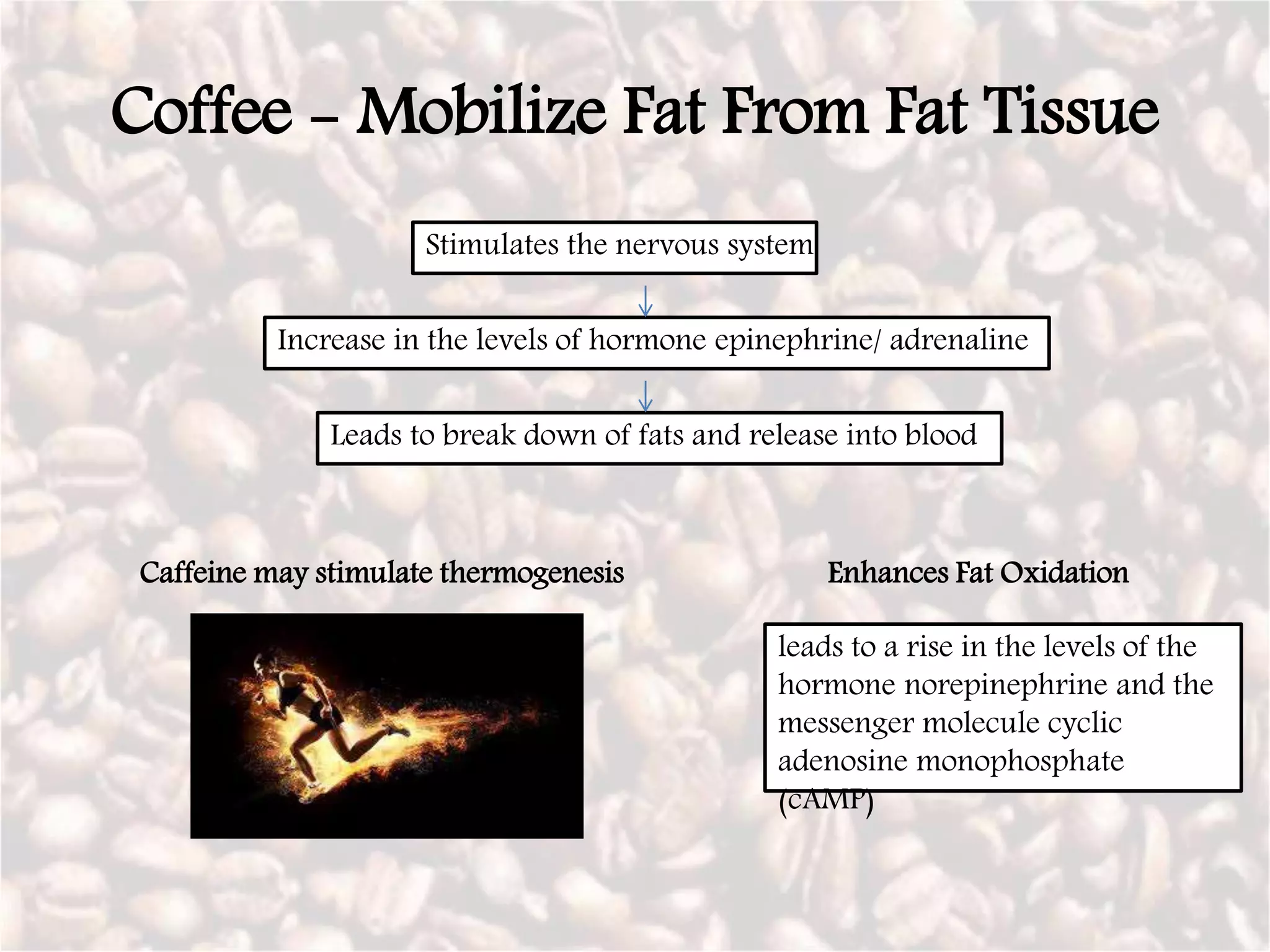
Catecholamine Release: By blocking adenosine receptors, caffeine indirectly stimulates the release of neurotransmitters and hormones like epinephrine (adrenaline) and norepinephrine (noradrenaline) from the adrenal glands and sympathetic nervous system. These are our "fight-or-flight" hormones, preparing the body for action. They increase heart rate, blood pressure, and, crucially, signal the body to mobilize energy reserves.
-
Increased Lipolysis: This is where the "burn" truly begins. Epinephrine and norepinephrine bind to beta-adrenergic receptors on fat cells (adipocytes). This binding activates an enzyme called hormone-sensitive lipase (HSL). HSL is the maestro of fat breakdown. It hydrolyzes triglycerides (the stored form of fat) within the adipocytes into free fatty acids (FFAs) and glycerol. These FFAs are then released into the bloodstream, becoming available fuel for other tissues, especially muscle cells during exercise.
-
Enhanced Fatty Acid Oxidation: Once FFAs are circulating, they can be taken up by muscle cells. Inside the muscle cells, these FFAs are transported into the mitochondria – the cell’s powerhouses – where they undergo beta-oxidation. This process breaks down fatty acids into acetyl-CoA, which then enters the Krebs cycle and electron transport chain to produce ATP, the body’s primary energy currency. Caffeine, by increasing the availability of FFAs, effectively encourages the body to lean more heavily on fat as a fuel source.
-
Thermogenesis: Caffeine also has a thermogenic effect, meaning it increases heat production in the body. This is partly due to the increased metabolic rate and the energy expenditure involved in the processes mentioned above. While the direct increase in calorie burn from thermogenesis alone might be modest, it contributes to the overall energy balance equation.
-
Calcium Mobilization: Caffeine can also directly affect intracellular calcium levels, particularly in muscle cells. Increased calcium release can enhance muscle contraction and force, which can improve exercise performance and, indirectly, increase energy expenditure.
In essence, caffeine acts as a metabolic amplifier. It doesn’t magically create energy from nothing, but it shifts the body’s preference, encouraging it to tap into its existing fat reserves more readily, particularly when combined with physical activity.
Chapter 3: The Burn in Action – Caffeine, Exercise, and Substrate Utilization
The true power of caffeine in fat oxidation becomes most evident when we combine it with physical activity. For the knowledgeable audience, this isn’t about passive weight loss; it’s about optimizing performance and metabolic efficiency.
Caffeine as an Ergogenic Aid:
Caffeine is one of the most well-researched and proven ergogenic aids for exercise performance. Its benefits extend beyond mere mental alertness:
- Endurance Performance: Numerous studies have shown that caffeine can significantly improve endurance exercise performance, delaying fatigue during activities like running, cycling, and swimming. This is partly attributed to its effect on substrate utilization. By promoting fat oxidation, caffeine spares muscle glycogen stores. Glycogen is a finite resource, and its depletion is a primary cause of fatigue during prolonged exercise. By using more fat, the body can conserve glycogen, allowing athletes to maintain a higher intensity for longer.
- Reduced Perception of Effort (RPE): Caffeine has been shown to reduce the perception of effort during exercise. This means that a given intensity of exercise feels easier, allowing individuals to push harder or maintain effort for longer periods before feeling fatigued. This effect is thought to be mediated by its action on the central nervous system, dampening pain signals and increasing dopamine release.
- Increased Fat Oxidation During Exercise: Research consistently demonstrates that caffeine intake before exercise leads to a greater reliance on fat as a fuel source, especially during moderate-intensity exercise. This is precisely due to the mechanisms described earlier – increased catecholamines and activated HSL leading to greater FFA mobilization. While the absolute amount of fat burned might not be dramatically higher in a single session, the proportion of energy derived from fat increases. Over time, and with consistent training, this can contribute to improved body composition.
- Increased Power Output and Anaerobic Performance (to a lesser extent): While primarily beneficial for endurance, some studies suggest caffeine can also improve power output and performance in short, high-intensity activities, though the mechanisms here might be more related to central nervous system stimulation and muscle contractility.
The Resting Metabolic Rate (RMR) Effect:
Even at rest, caffeine can have a modest impact on energy expenditure. By increasing catecholamine release and stimulating thermogenesis, caffeine can slightly elevate the resting metabolic rate (RMR), meaning the body burns a few more calories even when inactive. While this effect is typically small (around a 3-11% increase for a few hours post-ingestion), it contributes to the overall daily energy expenditure. However, it’s crucial to manage expectations; this slight increase alone is rarely enough to cause significant weight loss without other lifestyle changes.
Individual Variability:
It’s vital to acknowledge that the effects of caffeine are not universal. Individual responses vary widely due to several factors:
- Genetics: A key genetic factor is the CYP1A2 enzyme, which is responsible for metabolizing caffeine in the liver. Individuals with a "fast" variant of this gene metabolize caffeine quickly and may experience fewer side effects and potentially greater benefits from higher doses. "Slow" metabolizers, conversely, may be more sensitive to caffeine’s effects and experience jitters, anxiety, or sleep disturbances from even moderate doses.
- Habituation/Tolerance: Regular caffeine consumption leads to tolerance. The body adapts by upregulating adenosine receptors, meaning more caffeine is required to achieve the same effect. This is why daily coffee drinkers might feel less of a "jolt" than occasional users. For optimal metabolic benefits, some individuals may benefit from occasional caffeine "breaks" to resensitize their systems.
- Body Weight and Composition: The dose of caffeine is often standardized, but its effects can vary based on an individual’s body mass and existing fat stores.
Chapter 4: Beyond the Brew – Synergies, Nuances, and the Holistic Picture
While caffeine is a powerful tool, its story is richer when viewed in context. Its metabolic effects are amplified and nuanced by other factors, and it’s essential to understand its limitations.
The Power of Synergy – Exercise and Nutrition:
Caffeine is not a magic bullet. Its fat-oxidizing potential is maximized when integrated into a lifestyle that includes regular exercise and a balanced, calorie-appropriate diet. Think of it as an accelerant, not the fuel itself.
- Pre-Workout Timing: Consuming caffeine 30-60 minutes before exercise allows sufficient time for absorption and peak plasma levels, maximizing its ergogenic and fat-mobilizing effects.
- Type of Exercise: While beneficial for many forms of exercise, caffeine’s impact on fat oxidation is most pronounced during moderate-intensity aerobic activities, where fat is a primary fuel source.
- Dietary Context: A diet rich in whole foods, adequate protein, and healthy fats, with appropriate carbohydrate intake, provides the foundational metabolic health upon which caffeine can exert its benefits.
Other Bioactive Compounds in Coffee:
The coffee bean is a complex matrix of thousands of bioactive compounds, not just caffeine. While caffeine takes center stage for fat oxidation, other compounds contribute to coffee’s overall health profile:
- Chlorogenic Acids (CGAs): These potent antioxidants are abundant in coffee. They have been studied for their potential role in glucose metabolism, insulin sensitivity, and even fat metabolism. Some research suggests CGAs can inhibit glucose absorption in the gut and improve insulin signaling, which indirectly supports a metabolic environment conducive to fat burning.
- Diterpenes (Cafestol and Kahweol): These compounds, particularly found in unfiltered coffee (like French press or espresso), have mixed effects. While they possess anti-inflammatory and anti-cancer properties, they can also raise LDL cholesterol levels in some individuals.
- Antioxidants: Coffee is one of the richest sources of antioxidants in the Western diet. These compounds combat oxidative stress, which is linked to various chronic diseases and inflammation, further supporting overall metabolic health.
The Darker Side – Navigating the Shadows:
No story is complete without acknowledging its complexities and potential drawbacks. Caffeine, while beneficial for many, can have negative consequences for some:
- Sleep Disruption: Caffeine’s half-life (the time it takes for half of the substance to be eliminated from the body) can range from 3-7 hours. Consuming caffeine too late in the day can interfere with sleep patterns, leading to reduced sleep quality. Poor sleep, ironically, can impair fat metabolism and increase cravings for unhealthy foods.
- Anxiety and Jitters: For sensitive individuals or those consuming high doses, caffeine can induce anxiety, nervousness, jitters, and even panic attacks. This is due to its stimulatory effects on the central nervous system and increased catecholamine release.
- Gastrointestinal Distress: Caffeine can stimulate gut motility, which is beneficial for some, but can cause discomfort, stomach upset, or exacerbate conditions like IBS in others.
- Dependency and Withdrawal: Regular, heavy caffeine use can lead to physical dependence. Reducing or stopping intake can trigger withdrawal symptoms like headaches, fatigue, irritability, and difficulty concentrating.
- Cardiovascular Effects: While generally safe for most healthy individuals, caffeine can cause a temporary increase in blood pressure and heart rate. Those with pre-existing cardiovascular conditions should consult a healthcare professional.
Dosage and Moderation:
The "optimal" dose of caffeine for fat oxidation and exercise performance typically falls between 3-6 mg per kilogram of body weight, consumed 30-60 minutes before activity. For a 70 kg (154 lb) individual, this translates to roughly 210-420 mg of caffeine – equivalent to 2-4 cups of brewed coffee, depending on strength. Exceeding these doses often doesn’t confer additional benefits and increases the risk of side effects. Listening to one’s body and finding the personal sweet spot is paramount.
Chapter 5: The Unwritten Chapters – Future Research and Holistic Living
Our understanding of caffeine’s intricate dance with human metabolism continues to evolve. While much has been elucidated, several unwritten chapters remain for future research:
- Long-term Effects on Body Composition: While acute effects on fat oxidation are clear, more long-term, well-controlled studies are needed to quantify the sustained impact of regular caffeine consumption on body fat percentage and weight management in diverse populations.
- Gut Microbiome Interactions: The gut microbiome plays a crucial role in metabolism. How caffeine, and other coffee compounds, interact with and influence the gut microbiota, and how this, in turn, impacts fat oxidation and metabolic health, is a burgeoning area of research.
- Personalized Nutrition and Genetics: With advancements in nutrigenomics, tailoring caffeine intake recommendations based on individual genetic profiles (like CYP1A2 variants) and other biomarkers will become increasingly sophisticated, moving beyond one-size-fits-all advice.
- Synergistic Compounds: Further investigation into how caffeine interacts with other compounds, both within coffee (e.g., chlorogenic acids) and in the diet (e.g., specific micronutrients), to enhance or modulate fat oxidation pathways.
Ultimately, the story of "Burn and Brew" is one of empowerment and optimization. It’s about understanding a natural compound that, when used judiciously, can serve as a valuable ally in our quest for metabolic health and physical performance. It’s not a substitute for discipline, consistent effort, and a mindful approach to diet and exercise, but rather a sophisticated tool within a broader holistic strategy.
Conclusion: The Enduring Allure of the Brew
From the mystical goat herder’s serendipitous discovery to the complex molecular interactions within our cells, the journey of caffeine and its link to fat oxidation is a compelling narrative. It speaks to humanity’s enduring quest for vitality, for an edge, and for a deeper understanding of the forces that shape our bodies.
The daily ritual of the brew is more than just a habit; it’s an invitation to tap into an ancient wisdom, amplified by modern science. The aroma, the taste, the gentle awakening – these are the immediate pleasures. But beneath the surface lies a sophisticated biochemical ballet, orchestrated by caffeine, gently nudging our internal furnace to prioritize the burning of fat.
For the knowledgeable individual, this understanding transforms the simple act of drinking coffee. It becomes a conscious choice, an informed decision to potentially enhance performance, sharpen focus, and support metabolic health. It reminds us that sometimes, the most profound secrets are hidden in plain sight, waiting to be unveiled in the depths of a humble, invigorating cup. So, raise your mug, and appreciate not just the energy it imparts, but the intricate metabolic dance it subtly conducts, helping you to truly burn and brew.