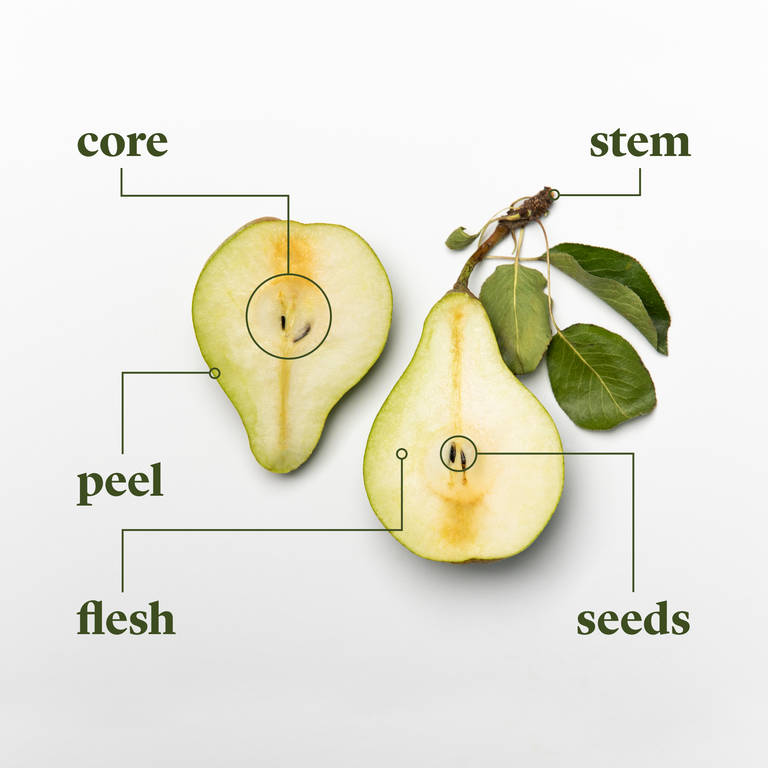

From the gentle curve of its silhouette to the delicate blush upon its cheek, the pear has long graced our tables and delighted our palates. Often overshadowed by its more ubiquitous cousin, the apple, the pear, with its unique texture and nuanced sweetness, is frequently underestimated. Yet, beneath its unassuming exterior lies a world of intricate biological design and a profound nutritional bounty waiting to be fully appreciated. This is not merely an article about a fruit; it is a journey into the very heart of Pyrus communis, an exploration of its anatomical marvels and the unique symphony of nutrients it conducts, told for the discerning mind eager to peel back the layers of a familiar friend.
Our story begins not in a test tube or a nutritional chart, but in the verdant embrace of an orchard, where the pear hangs, a testament to nature’s artistry. To truly understand its nutritional profile, we must first understand its physical architecture, for every component, from skin to core, plays a vital role in its overall health-promoting power.
Chapter 1: The Outer Citadel – The Skin and Its Unseen Guardians
Our first encounter with a pear is always visual, a dance of color and form. The skin, or epidermis, is the fruit’s primary defense, a thin, often waxy layer that protects the succulent flesh within from environmental aggressors, pests, and moisture loss. But this outer citadel is far more than just a protective barrier; it is a concentrated reservoir of some of the pear’s most potent bioactive compounds.
Consider the diverse palette of pear skins: the vibrant green of a Bartlett, the russet-bronze of a Bosc, the ruby blush of a Red Anjou. These colors are not merely aesthetic; they are indicators of specific phytochemicals at work. The green hues, for instance, hint at the presence of chlorophyll and other compounds, while the reds and purples of varieties like the Red Anjou or Red Bartlett signal a rich concentration of anthocyanins – powerful antioxidant flavonoids. These pigments, often more abundant in the skin than in the flesh, are central to the pear’s anti-inflammatory and antioxidant capabilities.
Beyond the visible spectrum, the skin is also a significant source of dietary fiber. While the flesh contributes substantially to the overall fiber content, the skin’s fibrous network, composed primarily of insoluble fiber, adds a crucial dimension. This insoluble fiber provides bulk, aiding in digestive regularity and promoting gut motility, acting as a natural broom for the intestinal tract.
Furthermore, the skin is home to an array of triterpenes, particularly ursolic acid. These compounds, often found in the waxy coatings of fruits, have garnered scientific attention for their potential anti-inflammatory, anti-cancer, and even muscle-building properties. While the quantities in a single pear may seem small, the cumulative effect of consuming the skin, rather than discarding it, significantly enhances the fruit’s therapeutic potential. The pear’s skin, therefore, is not merely packaging; it is an active participant in its nutritional narrative, a potent shield brimming with health-giving molecules. To peel a pear is, in many ways, to diminish its story.
Chapter 2: The Succulent Heart – The Flesh and Its Sweet Secrets
Penetrating the skin, we arrive at the pear’s most celebrated feature: its tender, juicy flesh. This parenchyma tissue, a matrix of cells engorged with water and soluble sugars, is what gives the pear its characteristic sweetness and mouthfeel. Yet, even this seemingly simple sweetness holds deeper secrets.
The unique "grittiness" often associated with pears, especially certain varieties like Bosc, is due to the presence of stone cells, or sclereids. These specialized cells, with their thick, lignified walls, are not merely textural curiosities; they contribute a specific type of insoluble fiber, adding another layer to the pear’s complex fiber profile.
The flesh is primarily composed of water – typically 80-85% – making the pear an excellent source of hydration. This high water content, combined with its natural sugars (fructose, glucose, and sucrose, often with a notable presence of sorbitol), provides a quick and easily digestible energy source. However, it’s the specific balance of these sugars and the presence of other compounds that prevents a rapid blood sugar spike, distinguishing it from simpler sugar sources.
Within this watery matrix, we find a treasure trove of soluble fiber, predominantly pectin. Pectin is a marvel of nature’s chemistry, a heteropolysaccharide that forms a gel-like substance when dissolved in water. This property is critical to its health benefits. In the digestive tract, pectin slows down the absorption of sugars, contributing to better blood glucose control. It also binds to cholesterol and bile acids, facilitating their excretion and potentially lowering blood cholesterol levels. Moreover, pectin is a powerful prebiotic, acting as a preferred food source for beneficial gut bacteria, thus nourishing the microbiome and promoting a healthy digestive ecosystem.
Beyond fiber and sugars, the flesh contributes significantly to the pear’s micronutrient profile. It is a good source of Vitamin C, a powerful antioxidant essential for immune function, collagen synthesis, and skin health. Potassium, a vital electrolyte, is also abundant, playing a crucial role in maintaining fluid balance, nerve signal transmission, and muscle contraction, thereby supporting healthy blood pressure. Traces of other essential minerals like copper and manganese, involved in energy production and antioxidant defense, are also present, often working in synergistic harmony.
The flesh also houses a significant portion of the pear’s phenolic acids, such as chlorogenic acid and coumaric acid. These compounds are potent antioxidants, contributing to the fruit’s ability to combat oxidative stress and inflammation throughout the body. Thus, the succulent flesh, far from being just a sweet indulgence, is a dynamic engine of hydration, fiber, essential vitamins, minerals, and bioactive compounds, working in concert to support physiological well-being.
Chapter 3: The Silent Heart – The Core and Its Hidden Purpose
As we delve deeper, we encounter the pear’s core, the central fibrous structure housing its seeds. While typically discarded by consumers, the core is biologically the fruit’s most vital component, representing its reproductive future. From a nutritional standpoint for human consumption, its direct contribution is minimal compared to the skin and flesh. However, understanding its anatomical role completes our story of the pear.
The core, or carpel, is primarily composed of lignified tissue, providing structural integrity for the developing seeds. The seeds themselves, nestled within the core, contain trace amounts of lignans, a type of phytoestrogen, and small quantities of fatty acids. While some fruit seeds contain beneficial compounds, pear seeds are not typically consumed in significant amounts, and like apple seeds, contain amygdalin, which can release cyanide when digested in large quantities. Therefore, from a practical nutritional perspective, the core and seeds are largely outside the scope of direct dietary benefit, serving primarily as a testament to the fruit’s life cycle. Yet, their presence is integral to the pear’s identity, anchoring the flesh and skin in a testament to its biological purpose.
Chapter 4: The Invisible Orchestra – Macronutrients Unveiled
Having explored the visible anatomy, let us now turn to the invisible forces at play – the macronutrients that fuel our bodies and contribute to the pear’s remarkable profile.
Carbohydrates: The Sweet Energy Source
Pears are predominantly carbohydrates, making them an excellent source of readily available energy. The sugars, primarily fructose, glucose, and sucrose, along with the sugar alcohol sorbitol, give the pear its characteristic sweetness. What’s crucial here is not just the presence of sugars, but their packaging. Encased within a fibrous matrix, these sugars are released slowly, preventing the rapid blood glucose spikes often associated with refined sugars. This makes pears a suitable choice for sustained energy, even for individuals managing blood sugar levels. The sorbitol, a polyol, can also contribute to the pear’s mild laxative effect in some individuals, further aiding digestive health.
Dietary Fiber: The Gut’s Best Friend
This is arguably the pear’s most celebrated macronutrient. As discussed, pears are a phenomenal source of dietary fiber, offering a robust blend of both soluble and insoluble types. A medium pear can provide around 6 grams of fiber, a significant contribution to the recommended daily intake.
- Soluble Fiber (Pectin): Beyond its role in blood sugar and cholesterol management, pectin’s ability to ferment in the colon is paramount. It serves as a powerful prebiotic, selectively feeding beneficial gut bacteria (e.g., Bifidobacterium and Lactobacillus species). This fermentation process produces short-chain fatty acids (SCFAs) like butyrate, acetate, and propionate. SCFAs are not just waste products; they are vital signaling molecules with profound systemic effects. Butyrate, in particular, is the primary fuel for colonocytes, maintaining the integrity of the gut barrier and reducing inflammation. It also plays a role in immune modulation and may even have anti-cancer properties.
- Insoluble Fiber (Cellulose, Hemicellulose, Lignin): This fiber type, found abundantly in the skin and the sclereids of the flesh, acts as a bulking agent. It adds volume to stool, facilitating its passage through the digestive tract and preventing constipation. By promoting regular bowel movements, insoluble fiber helps in the elimination of waste products and toxins, reducing the risk of conditions like diverticulosis and hemorrhoids.
The synergistic action of soluble and insoluble fiber in pears creates a comprehensive approach to digestive health, far surpassing the benefits of isolated fiber supplements.
Proteins and Fats: The Minor Players