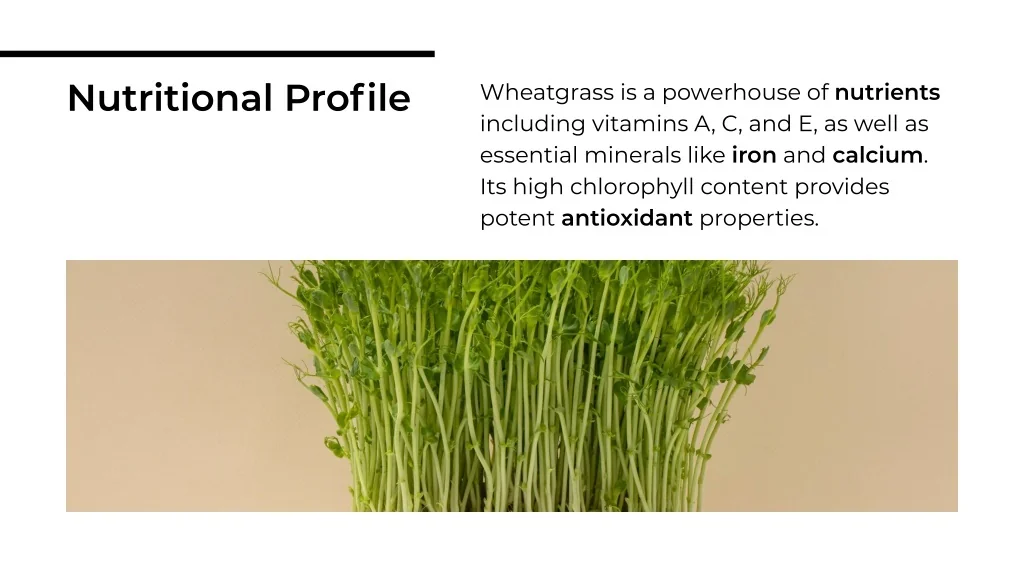

In a world increasingly driven by the pursuit of optimal health and natural remedies, certain foods emerge from the verdant tapestry of nature to capture our collective imagination. Among these, wheatgrass (Triticum aestivum) stands as an enduring emblem of vitality, an emerald elixir whispered about in health circles for decades. More than just a trendy juice shot, wheatgrass embodies a profound concentration of life-giving nutrients, earning its place as a cornerstone of many wellness journeys. Yet, its story extends far beyond the surface-level appreciation of its vibrant green hue. To truly understand the power of wheatgrass is to embark on a deep dive, to peel back the layers of its composition, and to uncover the intricate symphony of compounds that work in concert to nourish, protect, and revitalize the human body.
This article will journey into the heart of wheatgrass, unraveling its nutritional tapestry with a minimum of 2,000 words. We will move beyond the often-cited marvel of chlorophyll to explore the vast array of vitamins, minerals, enzymes, amino acids, and bioactive compounds that define its unique profile. Our audience, knowledgeable and discerning, seeks not just facts, but a comprehensive understanding of the mechanisms, the science, and the holistic narrative that underpins the enduring appeal of this remarkable green grass.
The Genesis of a Superfood: From Ancient Roots to Modern Revival
The story of wheatgrass isn’t a modern invention. While its popularization as a health tonic gained momentum in the 20th century, particularly through the pioneering work of Ann Wigmore, the use of cereal grasses for their health benefits can be traced back to ancient civilizations. Egyptians revered young wheat sprouts for their potent effects on health and vitality, recognizing their capacity to contribute to longevity. Various cultures have intuitively incorporated young grasses into their diets, understanding that the nascent stages of plant growth often hold the highest concentrations of nutrients, poised for rapid development.
The 20th century, however, provided the scientific lens through which to examine these intuitive practices. Figures like Charles F. Schnabel in the 1930s championed the nutritional superiority of cereal grasses, feeding them to chickens and observing remarkable improvements in their health and egg production. Ann Wigmore, often considered the "mother of wheatgrass," further propelled its acceptance, establishing health institutes and advocating for its use as a therapeutic agent for various ailments. Her work, though often met with skepticism from mainstream medicine, ignited a grassroots movement that continues to thrive today, built on anecdotal evidence and a growing body of scientific inquiry.
Chlorophyll: The Green Blood of the Earth
Any deep dive into wheatgrass must begin with its most visually striking and often lauded component: chlorophyll. This pigment, responsible for the vibrant green color of plants, is far more than just a aesthetic feature; it is the very engine of life on Earth. Through the miraculous process of photosynthesis, chlorophyll captures solar energy, converting it into the chemical energy that fuels plant growth and, ultimately, sustains all life forms. But what does this mean for human health?
The molecular structure of chlorophyll holds a fascinating secret. At its core lies a magnesium atom, surrounded by a complex porphyrin ring structure. This architecture bears a striking resemblance to heme, the oxygen-carrying component of hemoglobin in human blood, which instead has an iron atom at its center. This structural similarity is not a mere coincidence and has led to the popular moniker "the green blood of the earth."
The Proposed Benefits of Chlorophyll for Human Health:
-
Oxygenation: While chlorophyll doesn’t directly carry oxygen in the human body like hemoglobin, its consumption is hypothesized to improve the oxygen-carrying capacity of blood cells and tissues. This is thought to occur by enhancing the production of red blood cells, leading to better oxygen delivery throughout the body. Increased oxygen levels are vital for cellular respiration, energy production, and combating anaerobic conditions that can foster disease.
-
Detoxification and Cleansing: This is perhaps the most celebrated benefit of chlorophyll. It is believed to act as a powerful detoxifying agent, binding to toxins, heavy metals, and carcinogens in the digestive tract and facilitating their elimination from the body. Studies have shown chlorophyll’s ability to chelate certain heavy metals and environmental pollutants, reducing their absorption and promoting their excretion. Furthermore, chlorophyll is thought to support liver function, the body’s primary detoxification organ, by enhancing the activity of phase II detoxification enzymes.
-
Antioxidant Power: Chlorophyll, particularly its derivative chlorophyllin, is a potent antioxidant. It actively neutralizes free radicals, unstable molecules that cause oxidative stress, leading to cellular damage, inflammation, and chronic diseases. By scavenging these free radicals, chlorophyll helps protect DNA, proteins, and lipids from oxidative damage, contributing to anti-aging effects and disease prevention.
-
Anti-inflammatory Properties: Chronic inflammation is a root cause of many modern diseases. Chlorophyll has demonstrated anti-inflammatory effects by inhibiting the activity of pro-inflammatory enzymes and modulating inflammatory pathways. This can be beneficial for conditions ranging from arthritis to inflammatory bowel diseases.
-
Wound Healing and Antimicrobial Action: Topically, chlorophyll has been used for decades to promote wound healing and reduce inflammation in skin conditions. Internally, its antimicrobial properties are thought to contribute to a healthier gut microbiome by inhibiting the growth of pathogenic bacteria, while fostering beneficial ones.
-
Odor Neutralization: Chlorophyll has a long history as an internal deodorant. It is believed to neutralize body odors, bad breath, and even some gastrointestinal odors by binding to odor-causing compounds.