
In the intricate tapestry of human health, few areas are as rich with both genuine concern and pervasive misinformation as breast health. It’s a topic that touches lives profoundly, often inspiring fear, hope, and an urgent desire for knowledge. Yet, amidst the genuine scientific advancements and tireless advocacy, a shadow of myths and misconceptions continues to linger, propagated through word-of-mouth, sensationalized headlines, and the echo chambers of the internet. These myths, far from being harmless old wives’ tales, can sow seeds of unnecessary anxiety, lead to delayed diagnoses, or cause individuals to make ill-informed decisions about their care.
For the discerning mind, the journey through the landscape of breast health is one of critical inquiry and a commitment to evidence. It’s about empowering oneself with accurate information, separating fact from fiction, and understanding that true health literacy is a shield against fear and a beacon toward proactive well-being. This article embarks on that journey, aiming to dismantle seven of the most persistent and potentially damaging myths about breast health. We will delve into the origins of these falsehoods, dissect the scientific consensus that refutes them, and illuminate the truths that pave the way for informed choices and greater peace of mind. Prepare to shed old beliefs and embrace a clearer, more accurate understanding of breast health – a journey that could, quite literally, save lives.
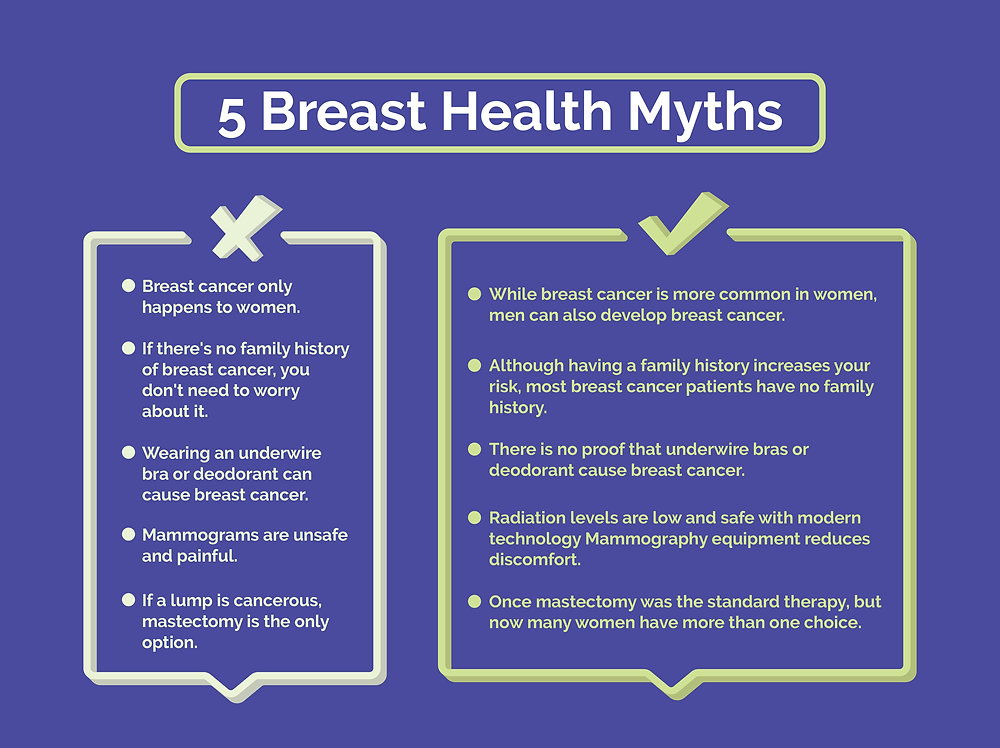
Myth 1: Underwire Bras Cause Breast Cancer
This myth, perhaps one of the most stubborn and widespread, has haunted women for decades, leading many to needlessly abandon supportive undergarments. The narrative often suggests that underwire bras impede lymphatic drainage, trapping toxins in the breast tissue and thereby increasing the risk of cancer. It’s a compelling, albeit entirely unfounded, theory that taps into a primal fear of external objects disrupting internal bodily functions.
The story of this myth’s rise to prominence can be traced back to a book published in the 1990s, which, lacking any scientific rigor, popularized the lymphatic drainage hypothesis. The authors claimed that bras, especially underwire ones, constrict the lymphatic system, preventing the body from clearing out carcinogens. This idea quickly took root in popular culture, despite being roundly dismissed by the medical and scientific communities.
Let’s unravel this claim with a dose of anatomical reality. The lymphatic system is a vast network of vessels and nodes that plays a crucial role in the immune system, filtering waste and toxins from the body. While it’s true that breast tissue contains lymphatic vessels, the idea that a piece of clothing could consistently and significantly impede this system to the point of causing cancer simply doesn’t hold water. Bras, even underwire ones, sit externally on the body. They exert pressure on the skin and superficial tissues, not on the deep-seated lymphatic channels in a way that would obstruct their function. If such superficial pressure could lead to cancer, we would see cancer rates skyrocket among individuals who wear tight clothing of any kind.
Numerous scientific studies have investigated this very question, and their conclusions are consistent: there is no credible evidence linking underwire bras, or any type of bra, to an increased risk of breast cancer. A landmark study published in Cancer Epidemiology, Biomarkers & Prevention in 2014, involving over 1,500 women, found no association between bra wearing (including type of bra, cup size, and duration of wear) and breast cancer risk. Other major health organizations, including the American Cancer Society and the National Cancer Institute, have unequivocally stated that this myth is unfounded.
The truth is, bras are primarily for support and comfort. The choice to wear an underwire bra, a sports bra, or no bra at all is a personal one, dictated by comfort, activity level, and aesthetic preference, not by cancer risk. Focusing on the comfort and proper fit of a bra is far more beneficial than worrying about its potential to cause disease. For many women, especially those with larger breasts, a well-fitting underwire bra provides essential support, alleviating back pain and improving posture. To deny oneself this comfort and support based on a baseless fear is to fall victim to misinformation. The real story here is one of science triumphing over pseudoscientific anxiety, liberating individuals to make choices that genuinely enhance their daily lives without fear.
Myth 2: Deodorants and Antiperspirants Cause Breast Cancer
Another myth that has created significant alarm and prompted countless individuals to scrutinize their daily hygiene products is the notion that deodorants and antiperspirants, particularly those containing aluminum or parabens, are linked to breast cancer. This fear stems from a hypothesis that these chemicals, absorbed through the skin, could mimic estrogen (parabens) or interfere with DNA and estrogen receptors (aluminum), potentially promoting the growth of cancer cells in the breast. The proximity of the underarm area to the breast, and the common practice of shaving before applying these products (theoretically increasing absorption), further fueled the concern.
The narrative gained traction in the early 2000s, leading to a surge in demand for "natural" or "aluminum-free" deodorants. While a conscious choice to opt for products with fewer synthetic chemicals is a personal preference many embrace, doing so out of a scientifically unfounded fear of cancer is a different matter. The core of this myth lies in speculative mechanisms rather than robust scientific evidence.
Let’s address the claims regarding aluminum. Antiperspirants work by temporarily blocking sweat ducts with aluminum-based compounds. While some studies have explored the presence of aluminum in breast tissue, and others have shown aluminum can have estrogen-like effects in in vitro (test tube) settings, these findings do not translate into a direct causal link to breast cancer in humans. The amount of aluminum absorbed through the skin from antiperspirants is minimal, and the body has efficient mechanisms for processing and excreting such compounds. Major regulatory bodies and cancer research organizations worldwide have extensively reviewed the available evidence. The U.S. Food and Drug Administration (FDA), the American Cancer Society (ACS), and the National Cancer Institute (NCI) all state that there is no definitive scientific evidence to support a link between antiperspirant use and breast cancer.
Similarly, parabens, a class of preservatives used in many cosmetics and personal care products, including some deodorants, have been flagged due to their weak estrogen-mimicking properties. Estrogen is known to play a role in the development of some breast cancers. However, the estrogenic activity of parabens is exceedingly weak compared to the natural estrogen produced by the body, and the amount absorbed through the skin is minuscule. Again, comprehensive reviews by expert panels have concluded that current scientific evidence does not establish a causal link between parabens in personal care products and breast cancer.
The story here is a classic example of correlation being mistaken for causation, amplified by internet speculation. While it’s always prudent to be mindful of what we put on our bodies, the pervasive fear surrounding deodorants and antiperspirants is largely unwarranted by scientific data. Individuals should feel confident using these products for personal hygiene without the added burden of cancer anxiety. The focus should remain on proven risk factors for breast cancer, such as genetics, lifestyle choices, alcohol consumption, and obesity, rather than diverting attention to unproven fears about everyday cosmetics. The true narrative is one of careful scientific scrutiny dispelling unfounded fears, allowing individuals to make choices based on facts, not fiction.
Myth 3: A Lump Is Always Cancer
The discovery of a lump in one’s breast is, for many, an instant trigger for profound fear and panic. The mind immediately jumps to the worst-case scenario: cancer. This immediate leap to a dire conclusion is understandable given the serious nature of breast cancer, but it is also a pervasive myth that can cause immense unnecessary distress. While any new lump or change in breast tissue must be medically evaluated, the overwhelming majority of breast lumps turn out to be benign (non-cancerous).
Imagine the scene: a moment of self-examination, a fleeting touch, and then – a distinct, unfamiliar bump. The heart races, breath catches, and a cold wave of dread washes over. This is the common human experience, a visceral reaction to the unknown threat. The narrative of "lump equals cancer" is so deeply ingrained that it overshadows the far more common benign possibilities, leading to sleepless nights and debilitating anxiety while awaiting a diagnosis.
Let’s clarify the reality. Breast tissue is naturally lumpy and uneven. It undergoes constant changes throughout a woman’s menstrual cycle, pregnancy, breastfeeding, and menopause, influenced by fluctuating hormone levels. Many types of benign breast conditions can manifest as lumps or masses:
- Cysts: These are fluid-filled sacs, very common, especially in women aged 35 to 50. They can be soft or firm and often change in size with the menstrual cycle. They are almost always benign.
- Fibroadenomas: These are solid, non-cancerous tumors made of glandular and connective tissue. They are common in younger women and often feel firm, smooth, and rubbery, moving easily under the skin (often described as feeling like a marble).
- Fat Necrosis: This occurs when an area of fatty breast tissue is damaged, often due to trauma (even minor trauma that goes unnoticed) or surgery. It can form a firm, round lump that may or may not be painful.
- Mastitis: An infection of the breast tissue, common in breastfeeding women, but can occur in others. It can cause a painful, red, swollen lump.
- Fibrocystic Changes: This is not a disease but a common condition where breasts feel lumpy, tender, or rope-like, often worsening before menstruation.
The critical distinction is that while these conditions present as lumps, they do not pose a cancerous threat. The vital message, therefore, is not to ignore a lump but to approach its discovery with an informed perspective. The truth is that while some lumps are indeed cancerous, the majority are not. However, only a medical professional, through physical examination, imaging (mammogram, ultrasound, MRI), and sometimes a biopsy, can definitively determine the nature of a lump.