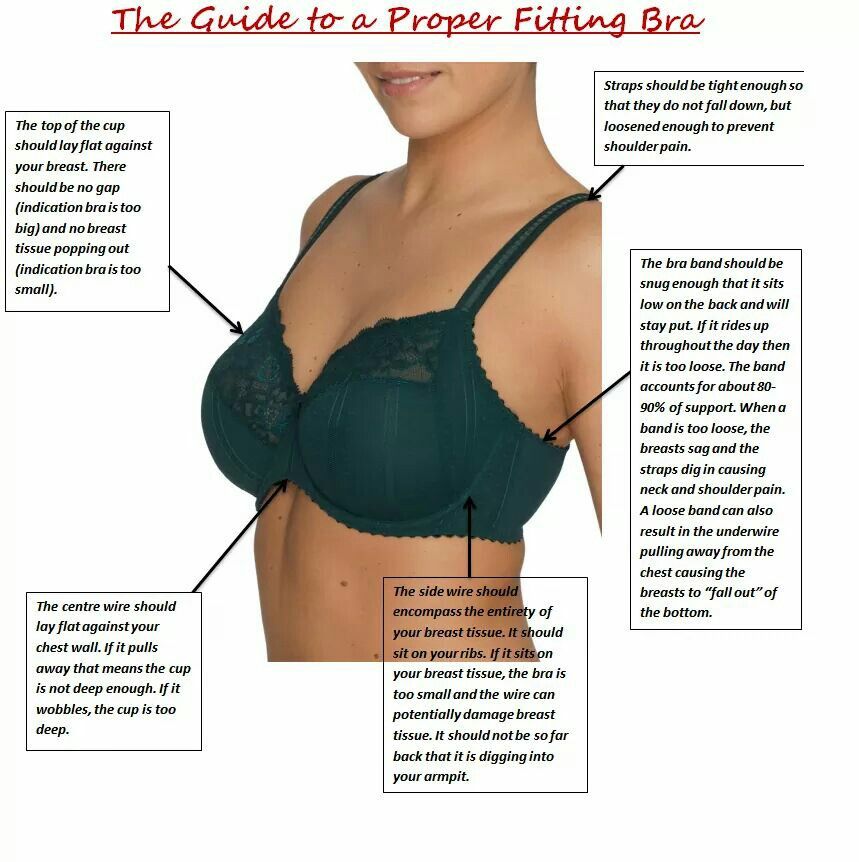

The unassuming bra, a garment woven into the fabric of daily life for billions, often receives little more thought than its aesthetic appeal or fleeting comfort. Yet, beneath its lace and fabric lies a profound responsibility: to provide structural support that profoundly impacts a woman’s physical health, posture, and overall well-being. This isn’t merely a matter of fashion or fleeting discomfort; it’s a fundamental aspect of biomechanics, a silent guardian of spinal integrity and musculoskeletal harmony.
For too long, the conversation around bras has been relegated to the fitting room, a whispered confession of ill-fitting straps or gaping cups. But the story of bra fit is far richer, delving into the intricate dance between gravity, anatomy, and engineering. It’s a narrative that begins with the inherent design of the female form and culminates in a cascade of consequences – both beneficial and detrimental – that reverberate throughout the body.
The Unsung Hero: Anatomy of the Breast and Its Support Needs
To truly grasp the importance of proper bra support, one must first understand the anatomy of the breast itself. Far from being a rigid structure, the breast is a delicate, dynamic entity composed primarily of glandular tissue (milk ducts and lobules), fatty tissue, and an intricate network of connective tissue known as Cooper’s ligaments. These ligaments are thin, fibrous bands that connect the breast tissue to the skin and the underlying chest muscle (pectoralis major). They provide the breast’s natural support, preventing excessive sagging.
However, Cooper’s ligaments, while vital, are not muscles. They cannot contract or strengthen. They are elastic, but their elasticity has limits. Over time, due to gravity, hormonal changes, weight fluctuations, pregnancy, breastfeeding, and high-impact activities, these ligaments stretch and lose their integrity. Once stretched, they do not retract, leading to the irreversible sagging (ptosis) that many women experience.
The weight of breast tissue is often underestimated. While it varies wildly from woman to woman, breasts can weigh anywhere from a few ounces to several pounds each. Imagine carrying two such weights constantly, day in and day out, with no muscular support of their own. This constant pull exerts significant downward force on the chest wall, shoulders, and spine. Without external support, the body’s natural compensatory mechanisms kick in, often leading to detrimental long-term effects.
The Biomechanics of Bra Support: A Symphony of Engineering
A well-fitting bra is an architectural marvel, a carefully calibrated system designed to counteract gravity’s relentless pull and distribute the breast’s weight effectively. It’s not just about "lifting" the breasts; it’s about anchoring them, stabilizing them, and preventing excessive movement. Each component of the bra plays a critical role in this biomechanical ballet:
-
The Band: The True Workhorse. This is perhaps the most misunderstood and undervalued component. The band, which encircles the torso directly beneath the breasts, is responsible for an astonishing 80-90% of the bra’s support. It should fit snugly, parallel to the floor, and remain level across the back. The band anchors the entire structure, distributing the weight around the rib cage rather than allowing it to pull downwards from the shoulders. When the band is too loose, it rides up the back, shifts the entire load to the shoulder straps, and effectively renders the bra useless.
-
The Cups: Containment and Encapsulation. The cups are designed to fully encapsulate each breast, lifting it away from the chest wall and preventing spillage over the top, sides, or bottom. They should provide a smooth, rounded silhouette without gapping or creasing. Proper cup fit ensures that the breast tissue is held securely, preventing uncomfortable friction, chafing, and the downward pull that strains Cooper’s ligaments.
-
The Underwire: The Foundation. For many women, the underwire is a non-negotiable feature, and for good reason. A well-placed underwire provides crucial separation and lift, creating a defined shape and anchoring the breast tissue independently from the chest wall. The underwire should sit flat against the sternum at the gore (the center panel) and fully encircle the breast tissue, resting on the ribs, not on the breast itself. It should not dig into the armpit or sit on the breast mound. Its role is to provide a stable base, preventing the breasts from merging or sagging centrally.
-
The Straps: The Finishing Touch, Not the Main Support. This is another common misconception. Bra straps are primarily for minor adjustments and to hold the cups in place, contributing only about 10-20% of the total support. They should sit comfortably on the shoulders without digging in, causing red marks, or creating visible indentations. If the straps are doing most of the work, it’s a clear sign that the band is too loose, and the structural integrity of the support system is compromised.
When these components work in harmony, they create a supportive framework that mitigates the effects of gravity, reduces breast movement, and allows the body’s natural musculoskeletal structures to function optimally.
The Cascade of Consequences: When Support Fails
The narrative of an ill-fitting bra is often one of quiet, persistent suffering that, over time, can escalate into significant structural health problems. The human body is a marvel of compensatory mechanisms, but these mechanisms come at a cost. When the breasts are inadequately supported, the body attempts to compensate, leading to a ripple effect of negative consequences:
1. Musculoskeletal System: The Burden on the Spine and Shoulders
- Upper Back and Neck Pain: This is arguably the most prevalent complaint. When the breasts lack proper support, their weight pulls forward and downward. To counteract this, the muscles of the upper back (trapezius, rhomboids, levator scapulae) go into overdrive, constantly straining to pull the shoulders back and keep the head upright. This chronic tension can lead to persistent aches, muscle spasms, stiffness, and the development of trigger points. The strain can radiate upwards, causing tension headaches and neck pain as the cervical spine tries to maintain alignment.
- Shoulder Pain and Grooves: Straps that bear too much weight dig into the delicate shoulder tissue, compressing nerves and blood vessels. This can lead to chronic pain, numbness, tingling, and even nerve damage (brachial plexus impingement in severe cases). Over time, deep, permanent grooves can form in the shoulders, a visible testament to years of inadequate support.