
In the intricate tapestry of human relationships, where threads of love, trust, aspiration, and vulnerability intertwine, the quest for longevity is often a silent, underlying current. Couples navigate countless challenges, celebrate myriad joys, and forge a shared identity through a continuous process of negotiation and commitment. Among the most fundamental, yet often unspoken, aspects of this shared journey is family planning – a realm traditionally fraught with imbalance, anxieties, and the invisible burdens disproportionately carried by one partner. Yet, in the modern landscape of evolving gender roles and deeper understandings of partnership, an often-overlooked procedure, the vasectomy, is emerging not just as a medical intervention, but as a profound declaration of shared responsibility, a catalyst for deeper intimacy, and a robust pillar supporting the enduring strength of a relationship.
This is not merely a clinical discussion of a minor surgical procedure; it is an exploration of its ripple effects, the silent revolution it ushers in within the confines of a committed partnership. It is a story, told through the lens of countless couples, of liberation, mutual respect, and the quiet power of a decision made together, for a future envisioned together. For the knowledgeable audience, attuned to the subtleties of human connection and the evolving dynamics of contemporary relationships, the narrative of vasectomy transforms from a simple medical choice into a powerful testament to enlightened partnership and, ultimately, to relationship longevity.
The Unseen Burden: Contraception’s Silent Toll on Relationships
Before we delve into the transformative power of vasectomy, it is crucial to first acknowledge the terrain from which it offers such profound relief. For generations, the burden of contraception has predominantly fallen upon women. From the daily discipline of hormonal pills to the insertion of IUDs, from the monthly anxiety of fertility tracking to the potential side effects and health risks, the responsibility for preventing unwanted pregnancies has been overwhelmingly female-centric.
Consider Maria and David, a couple deeply in love, building a life together. They have two beautiful children, a bustling home, and careers they are passionate about. Their family is complete. Yet, for Maria, the shadow of unintended pregnancy loomed large. She had cycled through various birth control methods – the pill, which brought mood swings and a constant internal monologue about remembering to take it; the patch, which caused skin irritation; and finally, an IUD, which, while effective, came with its own set of discomforts and the invasive procedure of insertion and removal. Each method, regardless of its efficacy, carried a mental load. The doctor’s appointments, the prescriptions, the monitoring of side effects, the underlying anxiety of "what if?" – these were all Maria’s.
This mental and physical burden is not merely an inconvenience; it is a subtle, yet persistent, source of stress that can erode the spontaneous joy of intimacy and, over time, breed resentment. The female partner often navigates a complex internal calculus: the desire for sexual connection, juxtaposed with the ever-present responsibility of preventing a pregnancy she may not want or be able to sustain. This creates a psychological barrier, a subtle layer of apprehension that can dull the edges of passion and make intimacy feel less like a free expression of love and more like a calculated risk.
The man, often unaware of the full scope of this burden, may perceive contraception as a "woman’s issue," a detail handled by his partner. This unconscious delegation, while not malicious, can create an imbalance, a subtle chasm in shared responsibility that, if left unaddressed, can widen into a deeper disconnect. The "pill brain," the hormonal fluctuations, the physical discomforts – these are often invisible to the male partner, making it difficult for him to fully empathize with the daily reality of his partner’s contraceptive journey. This asymmetry in burden can, over years, contribute to a quiet erosion of equity within the relationship, subtly undermining the very foundation of partnership.
The Paradigm Shift: Vasectomy as a Declaration of Shared Responsibility
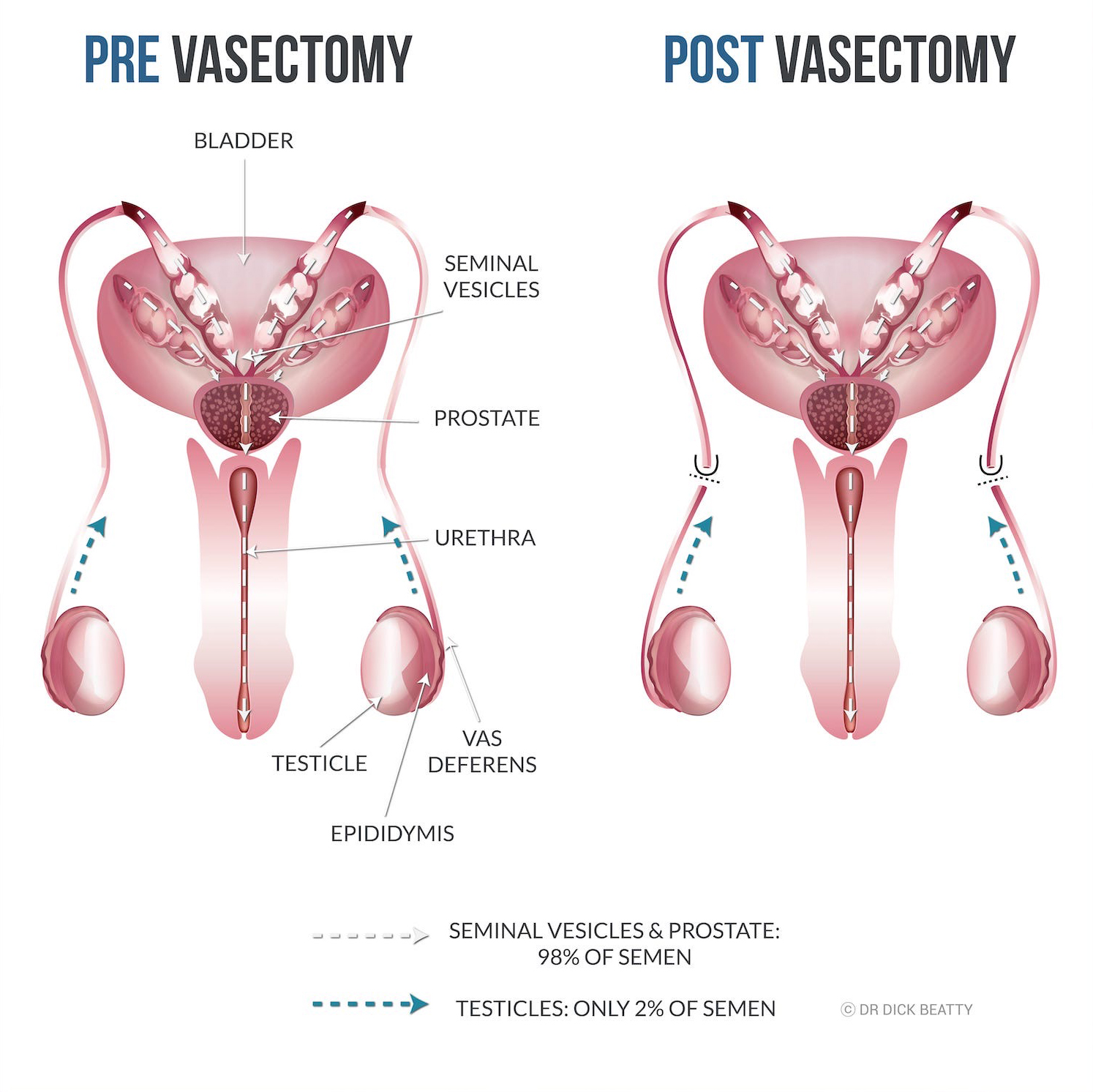
Enter the vasectomy – a simple, outpatient procedure for men that offers permanent and highly effective birth control. For many, the decision to undergo a vasectomy marks a profound paradigm shift in their relationship, transforming the landscape of family planning from a unilateral burden into a bilateral commitment. It is, in essence, a man saying: "I see your burden, I understand its weight, and I am willing to take an active, permanent step to share that responsibility with you."
This is not merely about preventing pregnancy; it is about an explicit acknowledgement of partnership. It signifies a man’s willingness to step forward, to undergo a minor procedure, often with minimal discomfort, to ensure his partner is free from the physical, emotional, and psychological demands of ongoing contraception. It is an act of profound empathy, a tangible demonstration of love that resonates far beyond the operating room.
For couples like Maria and David, when David suggested a vasectomy, it was an epiphany for Maria. "It was like a weight lifted I didn’t even realize I was carrying," she recounts. "He saw me, he truly saw the invisible load, and he chose to act. It wasn’t just about birth control; it was about him saying, ‘I am with you, completely.’" This act transformed their dynamic. It wasn’t just David undergoing a procedure; it was them, as a unit, making a definitive statement about their family’s future and their shared commitment to each other’s well-being.
This act of shared responsibility fosters a deeper sense of equity and fairness within the relationship. It challenges traditional gender norms that often dictate women as the primary caregivers and family planners. In doing so, it elevates the partnership to a more balanced and respectful plane, where both individuals are actively contributing to the shared future, not just in theory, but in tangible, personal ways. This fundamental shift in responsibility, often overlooked in its profundity, becomes a cornerstone upon which a more resilient and equitable relationship can be built.
Beyond the Procedure: A Deeper Intimacy and Rekindled Passion
Perhaps one of the most immediate and exhilarating impacts of a vasectomy on a relationship is the profound liberation it brings to intimacy. The fear of unintended pregnancy, a subtle yet pervasive undercurrent in many sexual encounters, is permanently removed. This allows for a spontaneity and freedom that can rekindle passion and deepen connection.
Imagine Elena and Mark, who after their second child, felt their sex life had become somewhat regimented. "It wasn’t that we didn’t desire each other," Elena explains, "but there was always that mental checklist: ‘Is it the right time of the month? Did I take my pill? Is the condom still good?’ It just took the edge off, that pure, unadulterated abandon." After Mark’s vasectomy, a palpable shift occurred. "It was like rediscovering each other," Mark shares. "There was no hesitation, no underlying worry. It was just us, completely present, completely free. It brought back a playfulness and a depth to our intimacy that we hadn’t realized we were missing."
This newfound freedom from reproductive anxiety allows couples to explore their sexuality more fully, to be more present in the moment, and to connect on a deeper, more uninhibited level. The removal of the "risk" factor allows intimacy to become purely about pleasure, connection, and expression of love, rather than a means to an end or a calculated gamble. This isn’t just about more frequent sex; it’s about sex that is more meaningful, more engaged, and more deeply satisfying for both partners.
Furthermore, the act of a vasectomy itself, as a gesture of love and commitment, can be a powerful aphrodisiac. Knowing that one’s partner has taken such a definitive step to ensure their shared future and well-being can foster an immense sense of trust and appreciation. This emotional intimacy, born from a shared decision and a profound act of care, translates directly into enhanced physical intimacy, creating a virtuous cycle that strengthens the bond between partners. The relationship’s sexual health, often a barometer of its overall health, experiences a significant uplift, contributing directly to its longevity.
The Foundation of Trust: A Vow in Action
A relationship’s endurance is inextricably linked to the strength of its trust. While trust is built through countless small actions and consistent reliability, there are pivotal moments that solidify its foundation. The decision for a vasectomy, made thoughtfully and jointly, stands as one such moment. It is a tangible vow, a commitment etched not just in words, but in action.
When a man undergoes a vasectomy, he is not just saying "I don’t want more children"; he is saying, "I am committed to our family as it is, to our shared future, and to your well-being." This act transcends mere practicality; it becomes a powerful symbol of dedication. It communicates, unequivocally, that the relationship and the established family unit are paramount, that future life decisions will be made with mutual consideration, and that the partner’s physical and mental health are valued.
For many women, this act of male sterilization offers a unique sense of security and peace. The constant background hum of contraceptive responsibility, often coupled with the fear of its failure, can be a subtle source of anxiety. The permanence and effectiveness of a vasectomy offer a profound release from this underlying stress. This security fosters a deeper sense of trust in the partner, knowing that he has taken a decisive and irreversible step to protect their shared future. This trust is not merely passive; it is an active, empowering force that allows both partners to feel more secure, more cherished, and more deeply connected.
This deepening of trust forms a more robust foundation for the relationship, enabling couples to face future challenges with greater resilience. When both partners feel truly seen, valued, and protected, their capacity for navigating life’s inevitable storms is significantly enhanced. The vasectomy, in this context, becomes a testament to an unwavering commitment, a tangible manifestation of a bond built on mutual respect and unwavering faith in the shared path ahead.
Liberating Futures: Personal and Joint Growth
Beyond intimacy and trust, the vasectomy frees up a significant amount of mental and emotional real estate that was previously occupied by family planning concerns. This liberation allows couples to channel their energy, resources, and focus into other areas of personal and joint growth, significantly contributing to relationship longevity.
When the question of "what if we get pregnant again?" is definitively answered, couples can dedicate their mental bandwidth to pursuing shared dreams and individual aspirations. Perhaps it’s a career pivot for one partner, a return to education for another, or a long-dreamed-of travel adventure together. The clarity that comes with permanent birth control allows for more deliberate and ambitious future planning.
Consider Sarah and Ben. After Ben’s vasectomy, Sarah, who had always harbored a desire to start her own business, felt a newfound courage. "It wasn’t just the financial aspect," she reflects, "it was the mental space. Knowing we were definitively done with having kids meant I could fully focus on building something for myself without the underlying ‘what if’ that always seemed to hold me back. Ben’s decision wasn’t just for us; it was for me too, for my dreams." This demonstrates how a vasectomy, while a personal decision, has profound implications for individual empowerment within the relationship.
Moreover, the financial implications are not insignificant. The long-term costs associated with contraception, doctor’s visits, and potential unplanned pregnancies are substantial. A vasectomy, a one-time procedure, offers a cost-effective solution that frees up financial resources for other investments – a down payment on a house, a child’s education fund, or simply more discretionary income for leisure and experiences that enrich the couple’s life together. This financial stability, born from a definitive family planning decision, further reduces stress and allows couples to pursue a more secure and fulfilling lifestyle, thereby strengthening their bond.
The shared journey of making the decision itself often leads to deeper communication and a more profound understanding of each other’s fears, hopes, and desires. This process of intentional dialogue, negotiation, and mutual agreement strengthens communication channels, a vital ingredient for any lasting relationship. Couples learn to articulate their needs, listen actively, and arrive at decisions that honor both individuals, setting a precedent for how future challenges will be approached.