
The crisp air of autumn, the vibrant hues of turning leaves, and the comforting aroma of spices – these are the harbingers of pumpkin season. From lattes to pies, roasted seeds to savory stews, pumpkin takes center stage, a beloved symbol of hearth and home. Yet, amidst the seasonal cheer, a quiet debate simmers in kitchens and grocery aisles across the land: when it comes to nutrition and health, is fresh pumpkin truly superior to its convenient canned counterpart?
For many, the answer seems obvious. Fresh, natural, unprocessed – surely that must always triumph over something that comes from a tin. It’s an intuitive leap, rooted in a broader societal preference for whole foods and a skepticism towards anything ‘processed.’ But as with many culinary assumptions, the truth about pumpkin is far more nuanced, a rich tapestry woven with science, convenience, and a touch of agricultural ingenuity.
Join us on a culinary expedition as we peel back the layers of this fascinating debate, delving into the origins, processing, and intricate nutritional profiles of both fresh and canned pumpkin. Our journey will challenge preconceptions, illuminate surprising facts, and ultimately empower you to make an informed choice that best suits your palate, your pantry, and your pursuit of optimal health.
The Allure of the Artisan: Embracing Fresh Pumpkin
There’s an undeniable romance to the fresh pumpkin. It begins with the selection – a trip to the farmer’s market or a grocery store display, searching for that perfectly proportioned, unblemished specimen. The anticipation builds as you bring it home, the weight of it in your hands promising culinary rewards.
The Journey from Field to Fork:
The typical "pie pumpkin" or "sugar pumpkin" (varieties like Small Sugar, Baby Pam, or Lumina) is cultivated for its sweet, dense flesh and manageable size. Once harvested, its journey to your plate involves several labor-intensive steps:
- Selection & Preparation: Choosing a ripe, firm pumpkin free of soft spots or mold. Washing the exterior thoroughly.
- Disassembly: The daunting task of cutting through its tough skin, scooping out the fibrous strands and seeds (which, thankfully, can be roasted for a delicious snack!).
- Cooking: Roasting is the preferred method for many, as it concentrates the flavors and caramelizes the natural sugars, yielding a richer, sweeter puree. Boiling or steaming are also options, though they can result in a more watery puree.
- Pureeing: Once tender, the cooked flesh is scooped out and mashed or blended until smooth, ready for incorporation into recipes.
The Nutritional Canvas of Fresh Pumpkin:
When we speak of fresh pumpkin, we’re discussing the pure, unadulterated flesh of the squash. Its nutritional profile is impressive:
- Vitamins: A powerhouse of beta-carotene, the precursor to Vitamin A, crucial for vision, immune function, and skin health. It also provides a respectable amount of Vitamin C, an antioxidant that supports immunity, and smaller contributions of Vitamin E (another antioxidant) and various B vitamins (like folate).
- Minerals: A good source of potassium, vital for blood pressure regulation and fluid balance. It also contains manganese, copper, iron, and magnesium.
- Fiber: Rich in both soluble and insoluble fiber, promoting digestive health, satiety, and helping to regulate blood sugar levels.
- Antioxidants: Beyond beta-carotene, fresh pumpkin boasts other carotenoids like lutein and zeaxanthin, which are beneficial for eye health, along with phenolic acids.
- Water Content: Fresh pumpkin is approximately 90-92% water, which means its nutrients are somewhat diluted compared to its canned counterpart, volume for volume.
The Advantages of Fresh:
- Unadulterated Purity: You control every step, ensuring no added sugars, salts, or preservatives.
- Flavor Depth: Roasting a fresh pumpkin can develop deeper, more complex flavors due to caramelization, offering a truly gourmet experience.
- Textural Control: The moisture content can be adjusted during the cooking process to achieve a desired consistency.
- The Experience: The satisfaction of transforming a whole vegetable into a delicious ingredient is a reward in itself.
The Downsides of the DIY Approach:
- Time & Effort: From cutting to roasting to pureeing, the process is undeniably time-consuming and can be physically demanding.
- Inconsistency: The sweetness and texture of fresh pumpkins can vary significantly depending on the variety, ripeness, and cooking method.
- Seasonal Availability: While some varieties are available year-round, peak season offers the best quality and price.
- Cost: While often cheaper per pound, the usable yield of pureed flesh from a whole pumpkin might not be as cost-effective as canned once preparation time is factored in.
The Practical Powerhouse: Unveiling Canned Pumpkin
For many, the familiar sight of a gleaming orange can in the pantry is the epitome of culinary convenience. Canned pumpkin is the silent workhorse of countless autumn recipes, a testament to efficiency and consistency. But what exactly is in that can, and how does it stack up against its fresh counterpart?
The Industrial Alchemist: From Field to Can:
This is where the story often takes a surprising turn for the knowledgeable audience. The vast majority of "canned pumpkin" sold in North America isn’t actually made from the same varieties of pie pumpkins you might roast at home. Instead, it’s typically made from specific varieties of winter squash, most commonly the Dickinson squash (Cucurbita moschata). This variety is often mistaken for a large butternut squash due to its tan skin and deep orange, string-free flesh. Why Dickinson? Because it offers a consistently sweet flavor, smooth texture, and high flesh-to-seed ratio, making it ideal for large-scale processing.
The journey of canned pumpkin is a marvel of food engineering:
- Harvest & Transport: Large fields of Dickinson squash are harvested.
- Cleaning & Preparation: The squash are thoroughly washed, then cut, deseeded, and peeled by specialized machinery.
- Cooking & Pureeing: The squash pieces are cooked (often steamed) until tender, then passed through pulpers and finishers to create a smooth, consistent puree.
- Canning & Sterilization: The puree is then filled into cans, sealed, and heat-sterilized at high temperatures (retort processing) to ensure safety and extend shelf life. This heat treatment also helps break down cell walls, making some nutrients more bioavailable.
The Nutritional Concentration of Canned Pumpkin:
Because canned pumpkin has a lower water content than fresh (due to the cooking and sometimes slight evaporation during processing), its nutrients are often more concentrated by volume.
- Vitamins: Still an exceptional source of beta-carotene (Vitamin A), often even more concentrated than fresh due to the removal of water. It retains some Vitamin C (though some is lost to heat processing), and good amounts of Vitamin E and B vitamins.
- Minerals: Similarly concentrated in minerals like potassium, manganese, copper, iron, and magnesium.
- Fiber: A fantastic source of dietary fiber, again often more concentrated than fresh.
- Antioxidants: The heat processing involved in canning can actually enhance the bioavailability of certain carotenoids, making them easier for the body to absorb.
- Water Content: Typically around 85-88% water, making it denser in nutrients per serving.
The Advantages of Canned:
- Unrivaled Convenience: Ready to use straight from the can, saving immense time and effort.
- Consistency: Every can offers a reliable flavor, texture, and moisture level, which is crucial for baking.
- Year-Round Availability: Not subject to seasonal fluctuations.
- Cost-Effectiveness: Often more economical than buying a whole pumpkin and accounting for the usable yield.
- Nutrient Concentration: Due to lower water content, canned pumpkin often provides more of certain nutrients (like Vitamin A and fiber) per cup than fresh.
- Enhanced Bioavailability: The cooking process in canning can break down tough plant cell walls, making carotenoids like beta-carotene more accessible for absorption by the body.
The Perceived (and Real) Downsides of Canned:
- "Processed" Perception: The biggest hurdle is often the psychological one, the idea that anything canned is inherently less healthy.
- Potential Additives: While most plain canned pumpkin contains only pumpkin (or squash), it’s crucial to check labels. Avoid "pumpkin pie filling," which contains added sugars, spices, and sometimes dairy.
- Loss of Some Nutrients: Some heat-sensitive vitamins, like Vitamin C, can be partially degraded during the canning process. However, this loss is often minor and doesn’t negate the overall nutritional value.
- Lack of Control: You don’t have the same control over flavor development or texture that you do with fresh.
The Head-to-Head Nutritional Showdown: A Deeper Dive
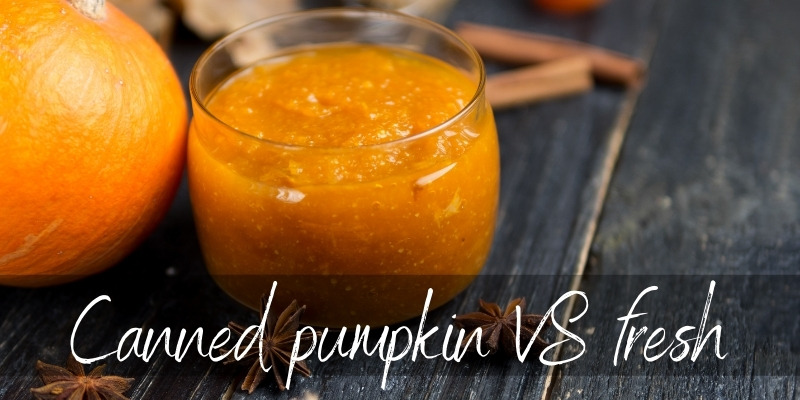
Now that we understand the origins and journeys of both fresh and canned pumpkin, let’s pit them against each other in a detailed nutritional comparison. For the sake of this comparison, we’ll consider 1 cup (about 245 grams) of cooked, mashed fresh pumpkin versus 1 cup (about 245 grams) of plain canned pumpkin puree.
1. Vitamin A (Beta-Carotene): The Golden Standard
- Fresh: A single cup of fresh cooked pumpkin typically provides well over 100% of the Daily Value (DV) for Vitamin A.
- Canned: Due to its concentrated nature and the effect of heat processing on cell walls, canned pumpkin often delivers an even higher amount, frequently exceeding 200-300% of the DV per cup. This is arguably where canned pumpkin shines brightest.
- Verdict: Canned pumpkin often has a slight edge here due to concentration and bioavailability. Both are exceptional sources.
2. Fiber: The Digestive Dynamo
- Fresh: A cup of fresh cooked pumpkin offers around 3-4 grams of dietary fiber.
- Canned: A cup of canned pumpkin typically provides 7-8 grams of fiber, again showcasing its concentrated nature. This includes both soluble fiber (aiding in cholesterol reduction and blood sugar control) and insoluble fiber (promoting regularity).
- Verdict: Canned pumpkin is a clear winner for fiber content per serving.
3. Vitamin C: The Immune Ally
- Fresh: Contains a good amount of Vitamin C, around 10-15% of the DV per cup.
- Canned: As Vitamin C is heat-sensitive, some of it is degraded during the canning process. While still present, it will likely be slightly lower than in fresh pumpkin.
- Verdict: Fresh pumpkin might have a slight edge, but both contribute to daily Vitamin C intake.
4. Potassium: The Blood Pressure Regulator
- Fresh: Provides a significant amount of potassium, crucial for electrolyte balance and heart health.
- Canned: Due to concentration, canned pumpkin generally offers more potassium per cup than fresh, often upwards of 500mg or more.
- Verdict: Canned pumpkin typically provides a higher concentration of potassium.
5. Other Minerals (Iron, Magnesium, Manganese, Copper):
- Both fresh and canned pumpkin are good sources of these essential minerals. Canned pumpkin, by virtue of its lower water content, will often present slightly higher values per cup.
6. Antioxidants (Lutein, Zeaxanthin, Phenolic Acids):
- Both forms are rich in a variety of antioxidants that combat oxidative stress and inflammation. The heat treatment in canning can sometimes alter the profile but doesn’t necessarily diminish the overall antioxidant capacity, and can even make some carotenoids more accessible.
- Verdict: Both are excellent sources of diverse antioxidants.
7. Sugar Content:
- Both fresh and plain canned pumpkin contain natural sugars. Canned pumpkin might appear to have slightly more sugar per cup due to its concentrated nature, but it’s the same natural sugar, just less diluted. Crucially, this is where distinguishing plain canned pumpkin from "pumpkin pie filling" is paramount. Pie filling has significant added sugars.
- Verdict: For plain versions, both are comparable, containing only natural sugars.
8. Sodium Content:
- Fresh: Naturally very low in sodium.
- Canned: Most plain canned pumpkin is very low in sodium, with no added salt. However, always check the label to ensure no sodium has been added during processing.
- Verdict: Both are generally low in sodium, assuming you choose plain canned pumpkin.
Beyond the Nutritional Label: The Holistic View
While nutritional panels provide crucial data, the healthfulness of a food often extends beyond its micronutrient count. Practicality, culinary application, and even psychological satisfaction play a role.
Culinary Performance:
- Fresh Pumpkin: Its texture can vary. If boiled, it might be watery, requiring extra draining for baking. If roasted, it can be drier and sweeter, lending itself well to pies, muffins, or savory dishes where a richer flavor is desired.
- Canned Pumpkin: Its consistent, smooth texture and ideal moisture content make it the gold standard for baking, especially pies and quick breads, where precise liquid ratios are important. Its neutral, slightly sweet flavor is a reliable base for many recipes.
Sustainability and Environmental Impact:
- Fresh Pumpkin: If sourced locally and seasonally, fresh pumpkin can have a lower carbon footprint due to reduced transportation and processing. However, if it travels long distances, its impact increases. Home preparation also generates food waste (skins, seeds if not used).
- Canned Pumpkin: Large-scale farming and industrial processing have their own environmental considerations, including energy consumption and packaging. However, canning reduces food waste by utilizing the entire usable part of the squash and extends shelf life, preventing spoilage in the home. The metal cans are also widely recyclable.
Cost-Effectiveness:
- A large fresh pumpkin might seem cheap initially, but once you account for the non-edible parts (skin, seeds, stringy bits) and the time/energy invested in preparation, the actual cost per cup of usable puree can be higher than a can of pumpkin. Canned pumpkin offers excellent value for its convenience and nutritional density.
The "Feel Good" Factor:
For some, the act of cooking with fresh, seasonal ingredients is inherently therapeutic and contributes to overall well-being. The sensory experience – the smell of roasting pumpkin, the texture of the raw squash – can be deeply satisfying. For others, the stress-reduction of quickly opening a can and knowing they’re still providing their body with exceptional nutrition is the greater benefit.
The Verdict: A Nuanced Understanding
So, after this deep dive, which is healthier: fresh or canned pumpkin?
The resounding answer is: Both are incredibly healthy, and the "better" choice largely depends on your specific needs, priorities, and culinary context.
- For sheer nutritional density per serving, especially for Vitamin A (beta-carotene) and fiber, canned pumpkin often takes a slight lead due to its concentrated nature. The processing involved can even enhance the bioavailability of certain carotenoids.
- For absolute control over ingredients, a potentially richer, more complex flavor profile (if roasted well), and the satisfaction of a DIY project, fresh pumpkin is your champion.
It’s crucial to avoid the common pitfall of equating "canned" with "unhealthy." Plain canned pumpkin puree is a minimally processed food – the squash is cooked, pureed, and then sterilized. It contains no added sugars, salts, or preservatives. It is a nutritional powerhouse that offers unparalleled convenience.
Optimizing Your Pumpkin Prowess: Tips for Maximizing Health Benefits
No matter which pumpkin you choose, here are tips to make the most of its incredible health benefits:
For Fresh Pumpkin:
- Roast, Don’t Boil: Roasting enhances flavor and reduces water content, leading to a richer puree.
- Season Simply: Let the natural sweetness shine with just a pinch of salt and perhaps a dash of cinnamon or nutmeg.
- Utilize Everything: Don’t discard the seeds! Roast them for a nutritious snack.
- Store Properly: Store whole pumpkins in a cool, dry place. Puree can be refrigerated for a few days or frozen for several months.
For Canned Pumpkin:
- Read Labels Carefully: Always choose 100% pure pumpkin puree, not pumpkin pie filling. The only ingredient should be "pumpkin" (or "squash").
- Stock Up: Canned pumpkin has a long shelf life, making it a pantry staple for year-round healthy eating.
- Use in Variety: Beyond pies, incorporate it into smoothies, oatmeal, yogurt, savory soups, chili, or even pasta sauces for a nutritional boost.
- Adjust for Moisture: Canned pumpkin is typically denser. If substituting for fresh puree in a recipe, you might need to add a touch more liquid.
Conclusion: Embracing the Best of Both Worlds
Our journey through the world of pumpkin reveals a truth more intricate than initially assumed. The debate between fresh and canned pumpkin isn’t a battle of good versus evil, but rather a celebration of two distinct yet equally valuable forms of a remarkably nutritious vegetable.
Fresh pumpkin offers the joy of hands-on creation, the nuanced flavors of artisanal preparation, and a deep connection to seasonal eating. Canned pumpkin, on the other hand, delivers unparalleled convenience, consistent quality, and a highly concentrated dose of vital nutrients, making it an accessible health hero for busy lives.
Ultimately, the healthiest choice is the one you will actually use and enjoy. Whether you’re carving out time for the rewarding process of roasting a fresh pumpkin or reaching for the reliable efficiency of a can, rest assured that you are incorporating a delicious, versatile, and profoundly beneficial food into your diet. So, embrace the pumpkin in all its forms, and savor the golden goodness it brings to your table, your body, and your well-being. The great pumpkin debate, it turns out, has no single victor, only informed choices and delicious possibilities.