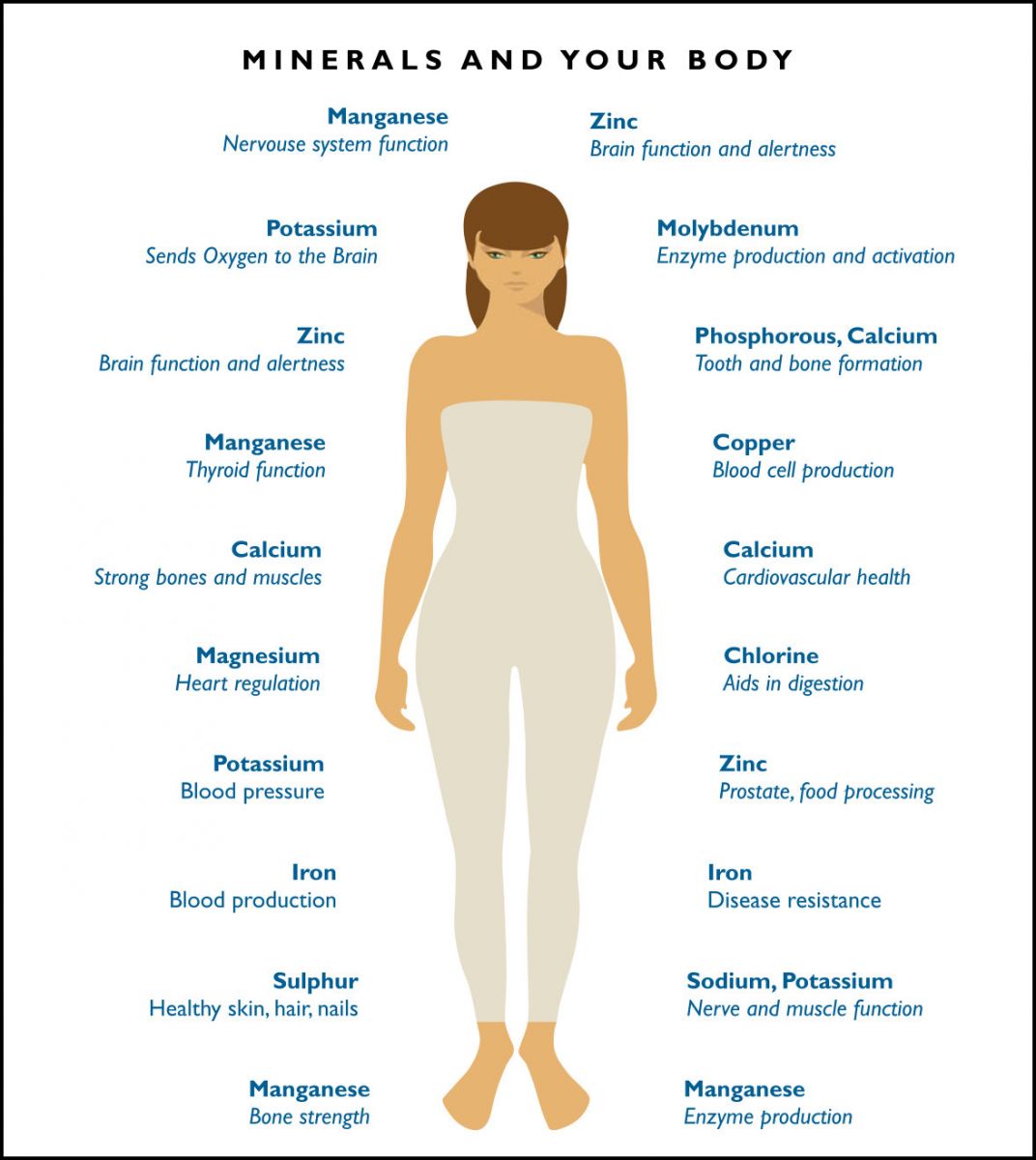

Imagine, for a moment, the most magnificent city you can conceive. Not just a collection of buildings, but a living, breathing metropolis with an intricate network of roads, towering structures, sophisticated communication systems, bustling factories, an efficient power grid, and a vigilant defense force. This city thrives, adapts, repairs itself, and constantly innovates, all while maintaining perfect harmony. Now, imagine that this entire marvel of engineering and design exists within you, powered by elements so small, so fundamental, they often escape our conscious appreciation: the essential minerals.
This is the story of your body’s infrastructure, not built with steel and concrete, but with calcium, magnesium, zinc, iron, and a host of other microscopic titans. They are the unseen architects, the meticulous engineers, the tireless foremen, and the indispensable raw materials that construct, maintain, and operate every single component of your existence. To understand their role is to unlock a profound appreciation for the astonishing complexity and resilience of the human form.
Chapter 1: The Blueprint and the Building Blocks – Defining the Essentials
Before we delve into the construction, let’s meet our builders. Essential minerals are inorganic substances, meaning they originate from soil and water, and are absorbed by plants or consumed by animals. Unlike vitamins, which are organic compounds, minerals retain their chemical structure. Our bodies cannot synthesize them; we must obtain them from our diet.
These essential minerals are broadly categorized into two groups, not by importance, but by the quantity our bodies require:
-
Macrominerals (Major Minerals): Needed in larger amounts (typically >100 mg/day). These include Calcium, Phosphorus, Magnesium, Sodium, Potassium, Chloride, and Sulfur. Think of them as the primary structural materials – the concrete, the rebar, the main power lines.
-
Trace Minerals (Microminerals): Needed in smaller amounts (typically <100 mg/day). These include Iron, Zinc, Copper, Manganese, Iodine, Selenium, Molybdenum, Chromium, and Fluoride. These are the specialized tools, the delicate wiring, the signal transmitters, the precise components that ensure the city functions with unparalleled efficiency.
The story of infrastructure isn’t just about what each mineral does in isolation. It’s about their synergistic dance, their intricate interplay, and how their collective presence or absence dictates the very integrity and vitality of our internal metropolis.
Chapter 2: The Foundation – The Skeletal Scaffold (Calcium, Phosphorus, Magnesium)
Every great city begins with a solid foundation and a sturdy framework. In the human body, this is the skeletal system – a dynamic, living scaffold that provides structural support, protects vital organs, anchors muscles, and even serves as a mineral reservoir. The primary architects here are Calcium and Phosphorus, with Magnesium acting as the indispensable project manager.
Calcium, the most abundant mineral in the body, is the chief constituent of bone. It combines with phosphorus to form hydroxyapatite crystals, which give bones their remarkable hardness and rigidity. Imagine these crystals as the reinforced concrete of our skeletal infrastructure. But this isn’t a static structure. Our bones are in a constant state of remodeling, with old bone being broken down by osteoclasts and new bone being laid down by osteoblasts. This continuous renovation ensures our infrastructure remains strong, adapts to stress, and repairs micro-fractures.
Phosphorus, second only to calcium in abundance, is the crucial partner. It’s the "rebar" within the concrete, providing additional strength and flexibility. Beyond structure, phosphorus is a vital component of phospholipids (which form cell membranes, the "walls" of every building in our city) and ATP (adenosine triphosphate), the primary energy currency that powers all cellular activities – from the smallest factory to the largest communication hub.
And then there’s Magnesium, the unsung hero, the master orchestrator. While a significant portion resides in bone, its role extends far beyond mere structure. Magnesium is essential for the proper formation of hydroxyapatite crystals; without it, calcium can’t be effectively incorporated into bone, leading to brittle structures. It also plays a critical role in activating Vitamin D, which is essential for calcium absorption. Magnesium ensures the construction project proceeds smoothly, preventing structural flaws and ensuring the long-term integrity of the bone framework. It’s the quality control manager, ensuring the concrete mix is just right.
But the skeletal system is more than just beams and columns. Calcium, in particular, is a critical signaling molecule. It’s the "on/off" switch for muscle contraction, nerve impulse transmission, and hormone secretion. When a nerve fires, calcium floods into the neuron, initiating the release of neurotransmitters – the vital messages carried across the city’s communication lines. When a muscle contracts, calcium is the signal that tells the contractile proteins to engage. Without precise calcium regulation, the entire city would experience communication breakdowns and muscular paralysis.
Chapter 3: The Electrical Grid and Communication Network – Electrolytes (Sodium, Potassium, Chloride)
Every modern city relies on a sophisticated electrical grid and a rapid communication network. In the human body, this is managed by the electrolytes: Sodium, Potassium, and Chloride. These minerals, when dissolved in body fluids, carry an electrical charge, enabling them to conduct electricity. They are the electricians, ensuring the power flows, and the data packets transmit seamlessly across the body’s vast network.
Sodium and Potassium work in a delicate, high-energy partnership, primarily through the sodium-potassium pump. This pump, present in virtually every cell membrane, actively transports sodium out of the cell and potassium into the cell, creating an electrical gradient. This gradient is the "voltage" across the cell membrane, akin to the potential energy stored in a city’s power lines. When a nerve impulse needs to fire or a muscle needs to contract, this electrical potential is momentarily reversed, creating an "action potential" – a rapid-fire electrical signal that zips across nerves and muscles at incredible speeds.
Think of sodium as the primary extracellular ion, predominantly found outside cells, contributing to the "charge" on the exterior of the cell membrane. Potassium, conversely, is the primary intracellular ion, largely residing inside cells, maintaining the internal charge. This precise separation is critical. A slight imbalance can disrupt nerve transmission, heart rhythm, and muscle function – leading to everything from muscle cramps to life-threatening cardiac arrhythmias.
Chloride, working closely with sodium, helps maintain fluid balance and acid-base equilibrium. It’s part of the body’s sophisticated "plumbing" system, ensuring that water and solutes are distributed correctly throughout the city, preventing floods or droughts in various cellular districts. It’s also a key component of hydrochloric acid in the stomach, essential for breaking down food and sterilizing incoming supplies.
Together, these electrolytes not only power the communication network but also regulate the body’s fluid balance, ensuring that every cell, tissue, and organ receives the precise amount of hydration it needs to function optimally. They are the guardians of the body’s internal environment, maintaining homeostasis amidst constant internal and external changes.
Chapter 4: The Energy Production Plants and Metabolic Factories – Cofactors (Magnesium, Zinc, Copper, Manganese, Molybdenum, Chromium)
Beyond structure and communication, a city needs power and production. The human body is a marvel of metabolic factories, constantly converting food into energy, synthesizing new molecules, and breaking down waste. Essential minerals act as indispensable cofactors – the specialized tools, the spark plugs, the catalysts – that enable thousands of enzymatic reactions to occur. Without them, the cellular factories would grind to a halt.
Magnesium reappears here as a central figure, a universal energy manager. It’s crucial for the synthesis and utilization of ATP. Every time an ATP molecule is used for energy, it must be bound to magnesium. Without magnesium, the "energy currency" of the cell is worthless. It’s involved in over 300 enzymatic reactions, including glycolysis (the initial breakdown of glucose), the Krebs cycle (the central hub of energy production), and oxidative phosphorylation (the electron transport chain, which generates the vast majority of ATP). Magnesium is the power plant’s lead engineer, ensuring the turbines spin and the energy flows.